Physical Properties of Copper Metal: Characteristics, Uses, and Scientific Facts
Physical Properties of Copper Metal
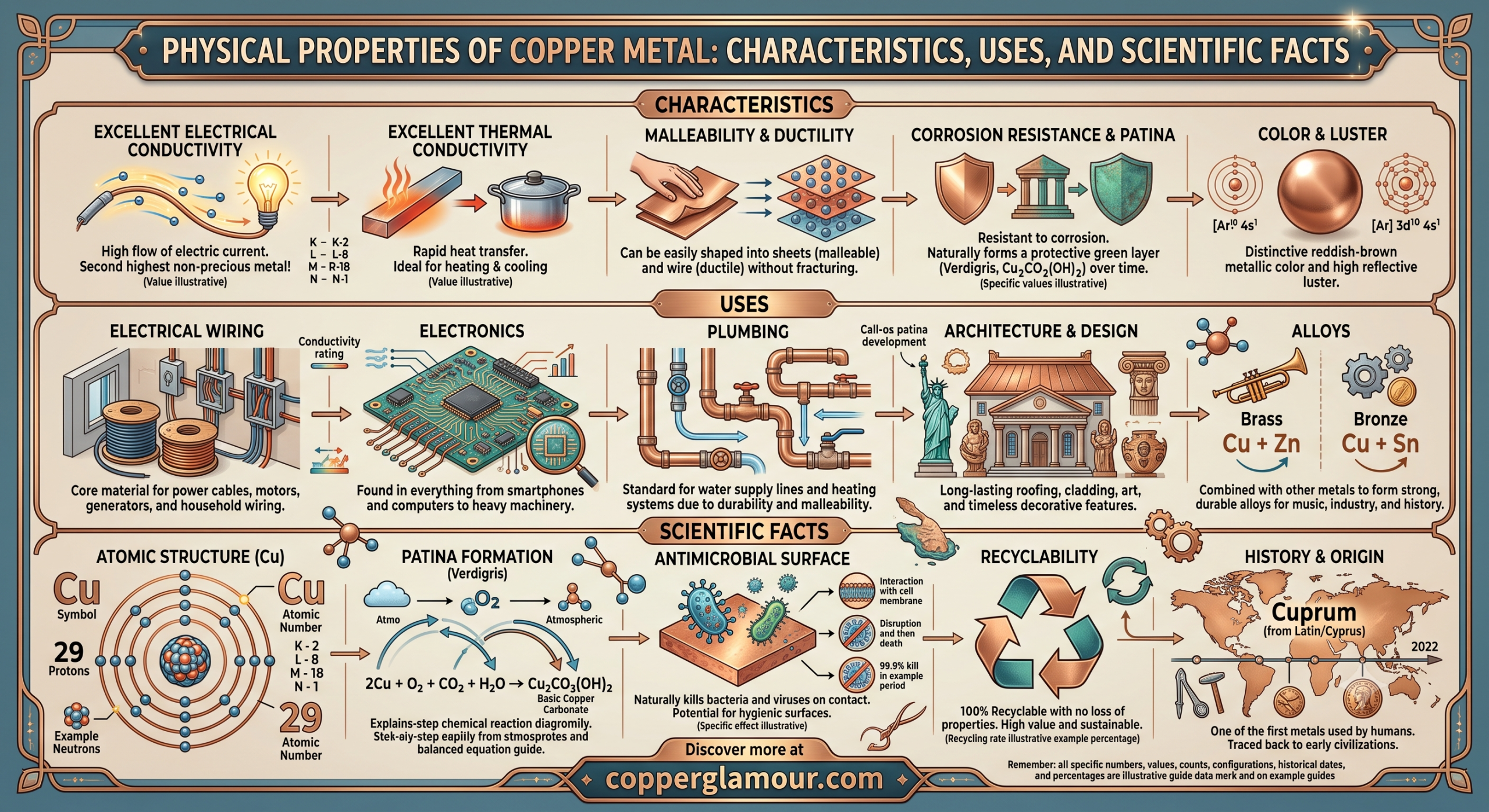
The physical properties of copper metal make it one of the most valuable and widely used materials in the world. Copper is known for its exceptional electrical conductivity, excellent thermal conductivity, corrosion resistance, durability, and attractive reddish-orange color. These qualities have made copper an essential material in construction, electronics, renewable energy, transportation, and handcrafted products for thousands of years.
At Copper Glamour, we transform high-quality copper into handcrafted jewelry, drinkware, cookware, and home décor that combines timeless beauty with lasting performance. Understanding copper’s physical and chemical properties helps explain why this remarkable metal continues to be trusted across so many industries.
According to Wikipedia’s article on Copper, copper has been used by civilizations for more than 10,000 years and remains one of the world’s most important engineering metals.
Explore the Copper Glamour Collection to discover artisan-crafted copper products designed for modern homes.
What Type of Element Is Copper?
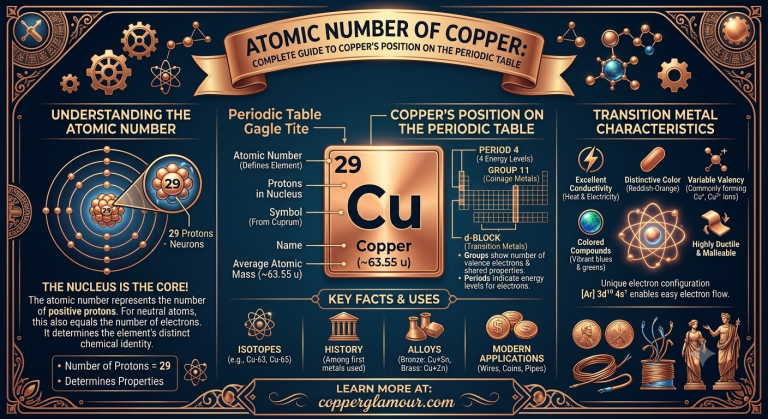
Copper is a chemical element and belongs to the transition metals on the periodic table.
Its scientific information includes:
- Element: Copper
- Chemical symbol: Cu
- Atomic number: 29
- Atomic mass: 63.546 u
- Group: 11
- Period: 4
- Classification: Transition metal
Therefore, copper combines the strength and conductivity expected from transition metals with excellent resistance to corrosion.
Is Copper an Element or Compound?
Copper is an element, not a compound.
Every piece of pure copper consists entirely of copper atoms. Furthermore, each copper atom contains exactly 29 protons, which uniquely identifies the element.
By contrast, compounds contain two or more different elements chemically bonded together. Since copper contains only one type of atom, it is classified as a naturally occurring chemical element.
Is Copper Metal?
Yes, copper is a metal.
More specifically, copper is a transition metal that combines excellent electrical conductivity, high thermal conductivity, durability, and flexibility. Consequently, industries worldwide depend on copper for electrical systems, electronics, renewable energy, transportation, and construction.
What Type of Metal Is Copper?
Copper belongs to the transition metal family.
Unlike many metals, copper naturally resists corrosion while remaining highly conductive and easy to shape. As a result, manufacturers use copper to produce wires, pipes, electrical components, cookware, and decorative products.
Physical Properties of Copper Metal
Copper possesses several remarkable physical characteristics.
Excellent Electrical Conductivity
Copper is one of the best conductors of electricity among commercially used metals. Therefore, electricians and engineers rely on copper for electrical wiring, motors, transformers, and electronic equipment.
Outstanding Thermal Conductivity
Copper transfers heat extremely efficiently. Consequently, manufacturers use it in cookware, heat exchangers, radiators, and cooling systems.
High Malleability
Copper bends and forms easily without breaking. Therefore, manufacturers can shape it into thin sheets, decorative panels, and complex architectural components.
Excellent Ductility
Copper stretches into long, thin wires while maintaining its strength. This property makes copper ideal for electrical cables and telecommunications systems.
Corrosion Resistance
Copper naturally develops a protective surface layer known as a patina. Consequently, copper products often last for decades with minimal maintenance.
Attractive Appearance
Copper’s distinctive reddish-orange color makes it popular for decorative architecture, jewelry, sculptures, and handcrafted home décor.
High Density
Copper has a density of approximately 8.96 g/cm³, giving it excellent durability and structural strength.
Melting and Boiling Points
Copper melts at approximately 1,084°C (1,983°F) and boils at approximately 2,562°C (4,644°F). These high temperatures allow copper to perform well in demanding industrial environments.
The American Chemical Society (ACS) provides additional educational resources about copper’s physical and chemical characteristics.
What Are Copper’s Chemical Properties?
Many readers also ask what are copper’s chemical properties?
Copper exhibits several important chemical characteristics.
Forms Stable Oxides
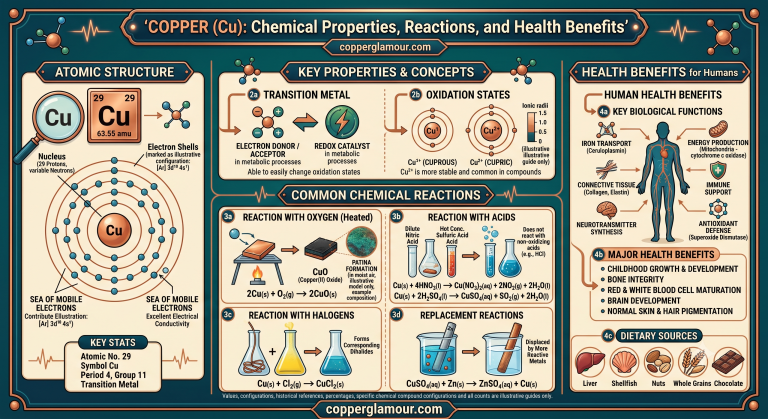
When exposed to oxygen, copper gradually forms a protective oxide layer. This natural coating helps reduce further corrosion.
Moderate Chemical Reactivity
Copper reacts more slowly than highly reactive metals such as sodium or magnesium. Therefore, it remains stable under many everyday conditions.
Multiple Oxidation States
Copper commonly exhibits oxidation states of +1 and +2, allowing it to participate in a wide variety of industrial and chemical processes.
Excellent Alloy Formation
Copper combines readily with other metals to produce useful alloys such as:
- Bronze (copper and tin)
- Brass (copper and zinc)
These alloys offer improved strength, durability, and corrosion resistance for many engineering applications.
Copper in Latin
The Latin name for copper is Cuprum.
Historically, the word evolved from aes Cyprium, meaning “metal of Cyprus.” Consequently, scientists adopted Cu as copper’s official chemical symbol.
Copper Name and History
The modern copper name traces its origins to the Latin word Cuprum.
Over centuries, Cuprum evolved through various European languages before becoming the English word copper. Nevertheless, the chemical symbol Cu continues to preserve its ancient Latin heritage.
How Did Copper Get Its Name?
Many people ask how did copper get its name?
Copper’s name originates from aes Cyprium, which referred to the abundant copper mined on the Mediterranean island of Cyprus. Eventually, this phrase evolved into the Latin Cuprum, from which both the English word “copper” and the chemical symbol Cu are derived.
What Is Copper Made Out Of?
Copper is not manufactured from other materials.
Instead, copper is a naturally occurring chemical element found in mineral ores beneath the Earth’s surface. After mining, producers refine these ores to produce high-purity copper suitable for industrial, commercial, and decorative uses.
What Is Copper Atomic Mass?
Copper has an average atomic mass of 63.546 atomic mass units (u).
Scientists calculate this value using the weighted average of copper’s two naturally occurring stable isotopes:
- Copper-63
- Copper-65
This value appears on the periodic table and serves as a key scientific property of the element.
Research available through PubMed explores copper’s material science and engineering applications. Additionally, the National Institutes of Health Office of Dietary Supplements explains copper’s biological importance as an essential trace mineral.
Copper in Artisan Craftsmanship
Copper’s outstanding physical properties make it an ideal material for handcrafted products.
Its durability, workability, and warm natural color allow artisans to create elegant mugs, bracelets, necklaces, bowls, kettles, and decorative accessories. Furthermore, copper naturally develops a protective patina over time, giving every handcrafted piece its own distinctive appearance.
Browse artisan-crafted collections at Copper Glamour, where traditional craftsmanship meets modern American design.
Frequently Asked Questions
What type of element is copper?
Copper is a transition metal and a naturally occurring chemical element.
Is copper an element or compound?
Copper is an element, not a compound.
Is copper metal?
Yes. Copper is a transition metal known for its excellent conductivity and durability.
What are copper’s chemical properties?
Copper forms stable oxides, commonly exhibits +1 and +2 oxidation states, reacts moderately with many substances, and readily forms alloys such as bronze and brass.
What is copper made out of?
Copper consists entirely of copper atoms and is refined from naturally occurring copper ores.
How did copper get its name?
Copper’s name comes from the Latin Cuprum, which originated from aes Cyprium, meaning “metal of Cyprus.”
Final Thoughts
The physical properties of copper metal make it one of the most versatile engineering materials available today. As a naturally occurring transition metal, copper combines outstanding electrical and thermal conductivity with corrosion resistance, durability, malleability, and recyclability. Moreover, its chemical properties allow it to form valuable alloys while maintaining long-term stability in demanding environments. From advanced technology and renewable energy to handcrafted jewelry and elegant home décor, copper continues to shape the modern world through both innovation and craftsmanship.
Discover handcrafted copper jewelry, cookware, drinkware, and decorative accessories at Copper Glamour.