Properties of Copper: A Complete Guide to Copper’s Physical and Chemical Characteristics
Properties of Copper
The properties of copper have made it one of the most valuable metals in human history. Copper is prized for its outstanding electrical conductivity, excellent thermal conductivity, corrosion resistance, durability, and distinctive reddish-orange color. These qualities have made copper essential in industries ranging from construction and electronics to renewable energy, transportation, and artisan craftsmanship.
At Copper Glamour, we appreciate copper for both its scientific importance and its timeless beauty. Our handcrafted copper jewelry, mugs, cookware, and decorative accessories highlight the natural elegance and lasting performance of this remarkable metal.
According to Wikipedia’s article on Copper, copper has been used for over 10,000 years and remains one of the world’s most important engineering materials because of its unique combination of physical and chemical properties.
Browse the Copper Glamour Collection to discover artisan-crafted copper products inspired by this extraordinary element.
What Is Copper?
Copper is a naturally occurring chemical element found in the Earth’s crust.
Its basic scientific information includes:
- Element: Copper
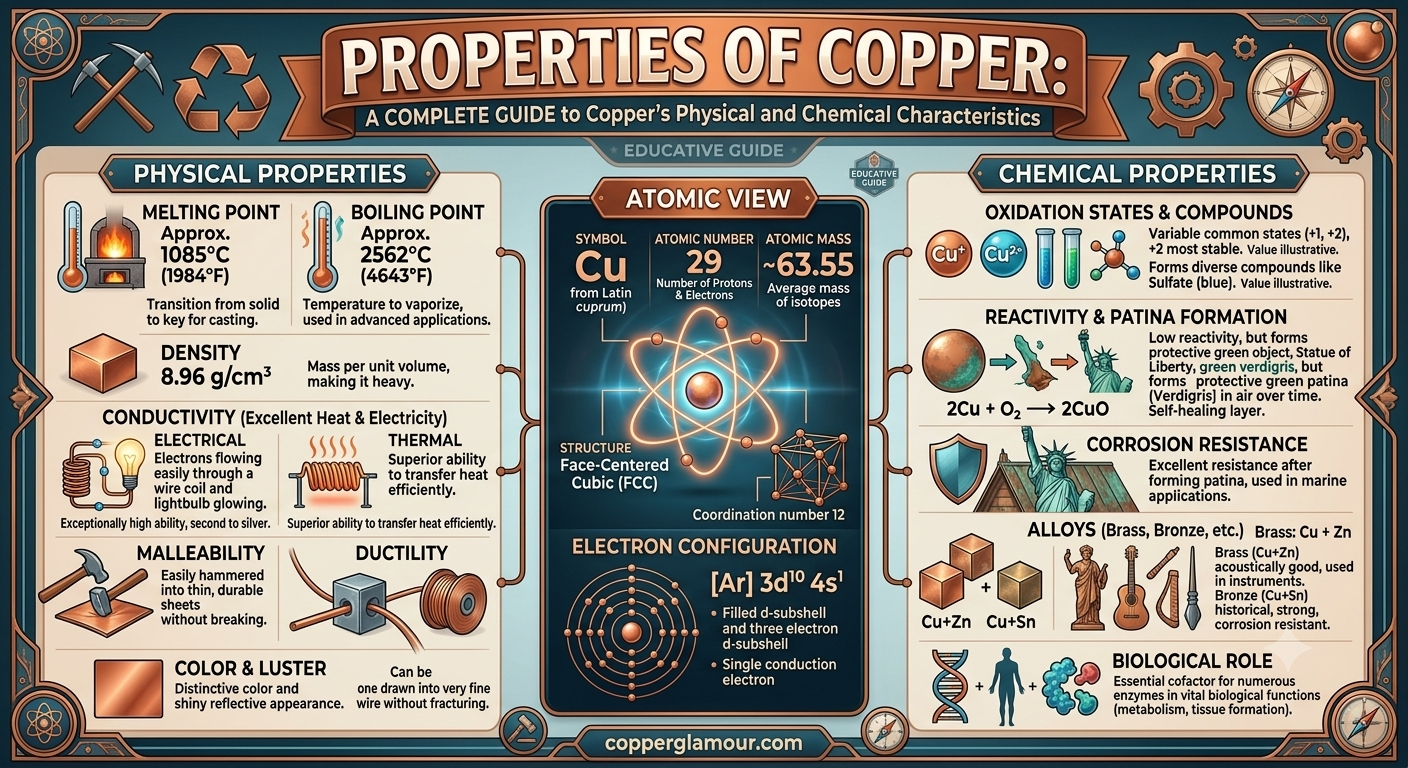
- Chemical symbol for copper: Cu
- Atomic symbol for copper: Cu
- Atomic number: 29
- Classification: Transition metal
If you’ve ever wondered what is the element for copper, the answer is simply copper, represented by the symbol Cu.
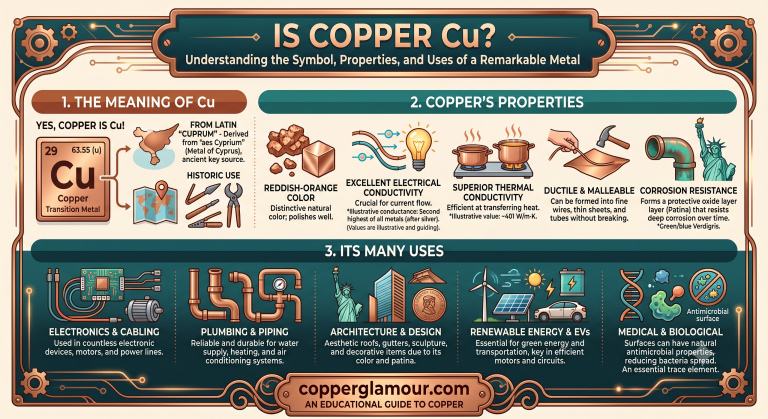
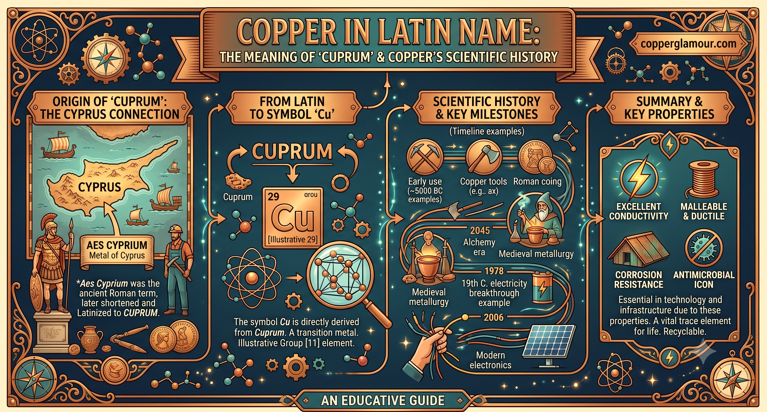
Likewise, if someone asks is copper Cu?, the answer is yes. The internationally recognized symbol for copper is Cu, derived from the Latin word Cuprum.
Is Copper an Element or Compound?
A common question is is copper an element or compound?
Copper is an element, not a compound.
An element consists of only one type of atom. In copper’s case, every copper atom contains 29 protons, which gives the element its identity. A compound, by contrast, is made from two or more different elements that are chemically bonded together.
Because copper is made entirely of copper atoms, it is classified as a pure chemical element.
Copper Atom
A copper atom is the smallest unit of copper that retains all of the element’s chemical characteristics.
Each neutral copper atom contains:
- 29 protons
- 29 electrons
- Usually 34 or 36 neutrons, depending on the isotope
The arrangement of these particles contributes to copper’s outstanding conductivity and strength.
Is Copper Metal or Nonmetal?
Many people ask is copper metal or nonmetal?
Copper is a metal, specifically a transition metal.
It belongs to Group 11 of the periodic table and displays all the classic characteristics of metals:
- Metallic luster
- Excellent electrical conductivity
- Excellent heat conductivity
- Malleability
- Ductility
- High durability
Unlike nonmetals, copper can easily be shaped, stretched into wires, and formed into complex products without losing its strength.
Physical Properties of Copper Metal
The physical properties of copper metal make it one of the most useful engineering materials available today.
Some of its most important physical characteristics include:
- Reddish-orange metallic color
- Excellent electrical conductivity
- Outstanding thermal conductivity
- Density of approximately 8.96 g/cm³
- Melting point of approximately 1,084°C (1,983°F)
- Boiling point of approximately 2,562°C (4,644°F)
- High malleability
- High ductility
- Excellent machinability
- Natural corrosion resistance
- Recyclability without significant loss of quality
These physical properties explain why copper is widely used in electrical systems, industrial equipment, and decorative products.
The American Chemical Society (ACS) provides additional educational resources explaining copper’s physical and chemical characteristics.
Chemical Properties of Copper
In addition to its physical characteristics, copper has several important chemical properties.
Copper:
- Forms protective oxide layers
- Resists corrosion in many environments
- Reacts slowly with oxygen
- Develops a green patina over long periods outdoors
- Forms useful alloys such as brass and bronze
- Has excellent resistance to biofouling in marine environments
These characteristics contribute to copper’s exceptional durability across a wide range of industries.
Materials Copper Is Used In
The list of materials copper is used in is extensive because of its versatility.
Copper is commonly found in:
- Electrical wiring
- Electronic circuits
- Renewable energy systems
- Electric vehicles
- Plumbing systems
- Roofing materials
- Heat exchangers
- Industrial machinery
- Kitchen cookware
- Decorative home accessories
- Coins
- Jewelry
- Telecommunications equipment
Its combination of conductivity, durability, and corrosion resistance makes copper indispensable in modern manufacturing.
What Is Copper Metal Used For?
Many people ask, what is copper metal used for?
Copper serves countless applications across many industries, including:
- Electrical power distribution
- Household wiring
- Computer components
- Smartphones
- Solar panels
- Wind turbines
- Electric vehicle motors
- Plumbing systems
- HVAC equipment
- Construction
- Decorative architecture
- Cookware
- Handcrafted mugs
- Artisan jewelry
- Home décor
As technology advances, demand for copper continues to grow because of its outstanding performance.
Research available through PubMed explores copper’s material science and engineering applications, while the National Institutes of Health Office of Dietary Supplements explains copper’s role as an essential trace mineral in human nutrition.
Copper in Artisan Craftsmanship
Copper’s warm appearance and exceptional workability have made it a favorite material among artisans for centuries.
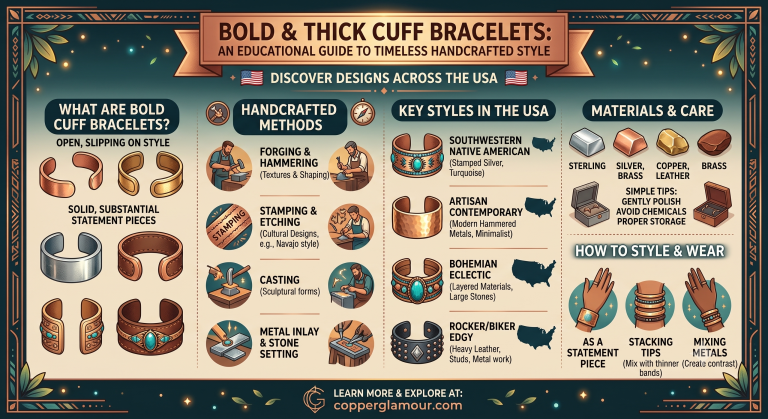
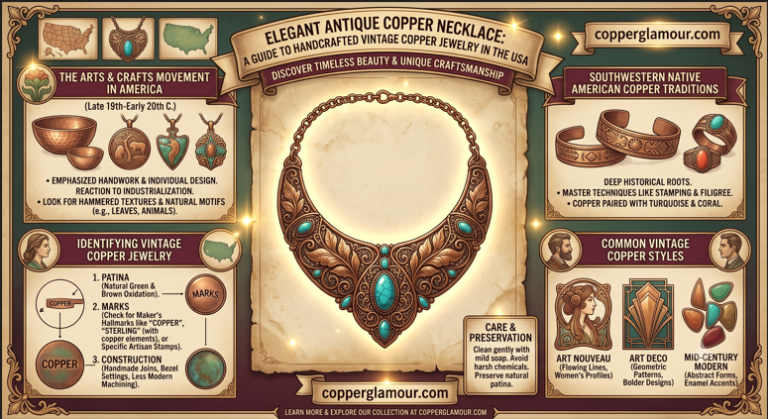
Handcrafted bracelets, necklaces, mugs, bowls, kettles, and decorative accessories showcase copper’s natural beauty while benefiting from its durability and timeless appeal. Over time, many handcrafted copper products develop a unique patina that adds character and individuality to each piece.
Explore the artisan collections at Copper Glamour to discover handcrafted copper products designed for homes across the United States.
Frequently Asked Questions
What is the chemical symbol for copper?
The chemical symbol for copper is Cu.
Is copper Cu?
Yes. Copper is represented by the symbol Cu on the periodic table.
Is copper metal or nonmetal?
Copper is a metal, specifically a transition metal.
Is copper an element or compound?
Copper is an element, not a compound.
What are the physical properties of copper metal?
Copper has excellent electrical and thermal conductivity, high malleability, high ductility, corrosion resistance, recyclability, and a distinctive reddish-orange color.
What is copper metal used for?
Copper is widely used in electrical systems, electronics, plumbing, renewable energy, construction, transportation, jewelry, cookware, and decorative home products.
Final Thoughts
The properties of copper make it one of the world’s most valuable and versatile materials. As a chemical element represented by the symbol Cu, copper combines exceptional electrical conductivity, corrosion resistance, durability, and beauty. Whether used in advanced technology, renewable energy, architecture, or handcrafted artisan products, copper continues to shape modern life while maintaining the timeless appeal that has made it valuable for thousands of years.
Discover handcrafted copper jewelry, mugs, cookware, and artisan accessories at Copper Glamour.