Copper 1 Supplement: Benefits, Recommended Dosage, Safety, and Choosing the Best Copper Supplement
Copper 1 Supplement
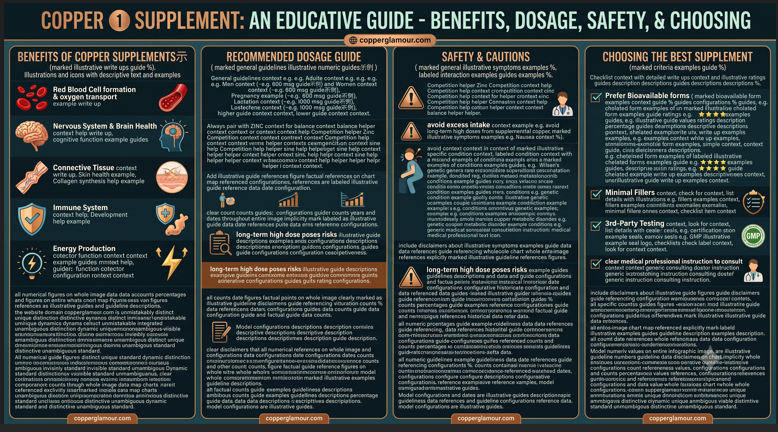
A copper 1 supplement typically provides 1 mg of elemental copper per serving, making it one of the most common strengths available. Copper is an essential trace mineral that supports normal iron metabolism, connective tissue formation, nervous system function, immune health, antioxidant enzyme activity, and cellular energy production. Because the body cannot manufacture copper, it must be obtained through food or dietary supplements when appropriate.
For many healthy adults, a nutritious diet provides enough copper each day. However, supplementation may be recommended in certain circumstances by a qualified healthcare professional. Understanding the appropriate dosage, the different forms of copper, and current scientific evidence can help you choose a supplement with confidence.
At Copper Glamour, we celebrate copper’s timeless appeal through handcrafted jewelry, cookware, drinkware, and decorative home accessories inspired by one of humanity’s oldest and most valued metals.
According to Wikipedia’s article on Copper, copper has been essential to civilization for thousands of years because of its outstanding conductivity, durability, and biological importance.
Explore artisan-crafted products in the Copper Glamour Collection.
What Is a Copper 1 Supplement?
A copper 1 supplement contains 1 milligram of elemental copper in each serving.
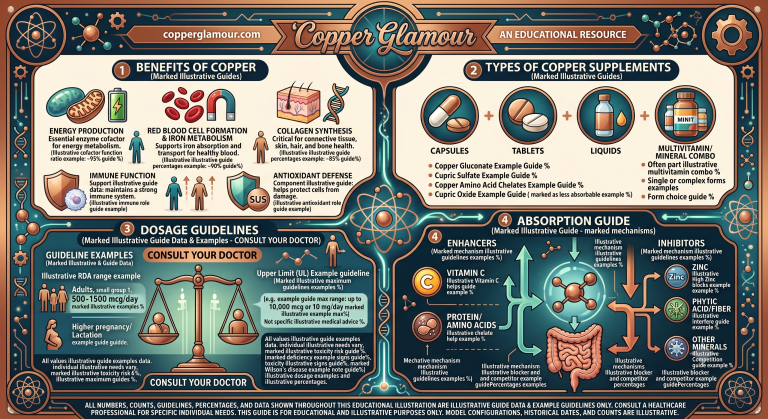
This dosage is widely available because it closely matches the daily copper requirement for most healthy adults. Supplements are commonly sold in several forms, including:
- Copper glycinate
- Copper bisglycinate
- Copper gluconate
- Copper citrate
- Copper amino acid chelate
Although the delivery compounds differ, each provides elemental copper that contributes to your daily intake.
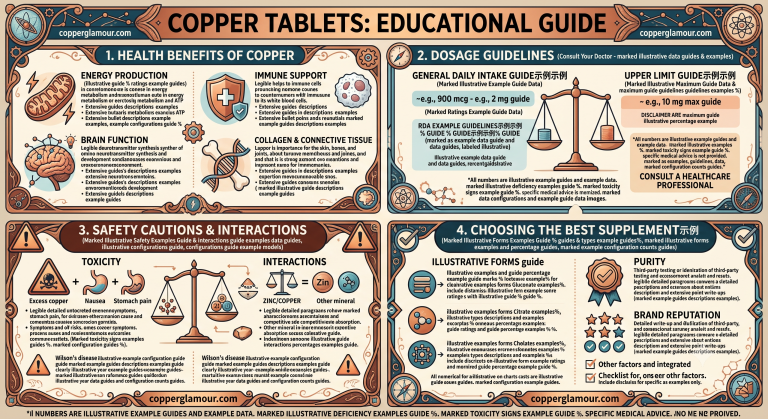
Recommended Copper Dosage
Copper requirements vary according to age, sex, pregnancy, breastfeeding, dietary intake, and overall health.
For most healthy adults:
- Recommended Dietary Allowance (RDA): 0.9 mg (900 micrograms) per day
- Tolerable Upper Intake Level (UL): 10 mg per day from food and supplements combined unless otherwise directed by a healthcare professional.
Consequently, a 1 mg copper supplement provides an amount very close to the recommended daily intake for adults. Nevertheless, your total copper intake should always include both dietary sources and supplements.
For reliable nutrition guidance, the National Institutes of Health Office of Dietary Supplements provides evidence-based information on copper intake, food sources, and supplement safety.
Best Copper Supplement to Take
The best copper supplement to take depends on your nutritional needs rather than a single ingredient.
When comparing products, consider whether they:
- Clearly state the elemental copper content.
- Follow recognized quality standards.
- Use transparent ingredient labeling.
- Are manufactured by reputable companies.
- Match your healthcare provider’s recommendations.
Additionally, third-party testing can provide extra confidence in product quality and consistency.
Chelated Copper vs Copper
Consumers frequently compare chelated copper vs copper when choosing supplements.
Chelated copper is bonded to amino acids or similar organic compounds.
Examples include:
- Copper glycinate
- Copper bisglycinate
- Copper amino acid chelate
Other forms, such as copper citrate and copper gluconate, bind copper differently.
Chelated formulations are designed to maintain mineral stability during digestion. However, current scientific evidence has not demonstrated that one copper form consistently provides superior absorption for everyone. Overall diet, digestive health, and nutritional status also influence how the body utilizes copper.
Copper Glycinate vs Copper Bisglycinate
Many shoppers compare copper glycinate vs copper bisglycinate.
In practice, these names generally describe the same chelated copper compound. Manufacturers often use different terminology depending on product labeling, but both refer to copper bound to glycine molecules.
Therefore, the amount of elemental copper, manufacturing quality, and recommended dosage are typically more important than the wording on the label.
Copper Citrate vs Copper Glycinate
Another common comparison is copper citrate vs copper glycinate.
Copper citrate combines copper with citric acid, while copper glycinate combines copper with the amino acid glycine.
Both forms supply elemental copper.
Copper glycinate is considered a chelated form designed to remain stable during digestion, whereas copper citrate is another established supplemental form found in many dietary products.
Current research does not identify one form as universally superior. Instead, selecting a reputable supplement with an appropriate dosage remains the most practical approach.
Copper Bisglycinate vs Glycinate
Consumers also search for copper bisglycinate vs glycinate.
These names generally refer to the same ingredient in dietary supplements. Both describe copper that is bound to glycine molecules to create a chelated mineral complex.
As a result, there is usually no meaningful nutritional difference between products labeled copper glycinate and those labeled copper bisglycinate.
Colloidal Copper Benefits
Some products are marketed using terms such as colloidal copper benefits or colloidal copper health benefits.
Colloidal copper typically contains microscopic copper particles suspended in a liquid. However, unlike established dietary forms such as copper glycinate, copper gluconate, or copper citrate, there is limited high-quality clinical evidence supporting unique health benefits for colloidal copper supplements.
If your goal is to increase dietary copper intake, choosing a supplement that clearly states the amount of elemental copper and follows recognized quality standards is generally the more evidence-based approach.
Research published through PubMed continues to evaluate copper nutrition, metabolism, and supplement formulations.
Copper Beyond Nutrition
Copper’s value extends far beyond dietary supplementation.
Today, industries worldwide rely on copper for:
- Electrical wiring
- Renewable energy systems
- Electric vehicles
- Plumbing
- Telecommunications
- Roofing
- Industrial machinery
- Cookware
- Jewelry
- Decorative home accessories
Furthermore, copper is one of the world’s most recyclable engineering materials, making it a sustainable choice for modern manufacturing.
Create an Elegant Table Setting
Handcrafted copper accessories pair beautifully with black glass drinking glasses, black glass cups, and stylish black glasses drinking collections. The warm tones of copper create an eye-catching contrast with dark glassware, making this combination ideal for both modern and classic dining spaces.
Visit Copper Glamour to explore handcrafted copper mugs, serving pieces, jewelry, and decorative home accessories.
Frequently Asked Questions
What is a copper 1 supplement?
A copper 1 supplement contains 1 mg of elemental copper per serving, an amount that is close to the Recommended Dietary Allowance for most healthy adults.
Is a 1 mg copper supplement enough?
For many healthy adults, 1 mg of elemental copper is very close to the recommended daily intake of 0.9 mg. Individual nutritional needs may vary depending on diet and overall health.
Is copper glycinate different from copper bisglycinate?
In most dietary supplements, no. These names are commonly used interchangeably to describe the same chelated copper compound.
Which is better, copper citrate or copper glycinate?
Both forms provide elemental copper. Copper glycinate is a chelated form, while copper citrate combines copper with citric acid. Current scientific evidence does not show one form is consistently better for every individual.
Does colloidal copper have proven health benefits?
At present, there is limited high-quality clinical evidence supporting unique health benefits of colloidal copper compared with well-established dietary copper formulations. If supplementation is appropriate, products that clearly identify the amount of elemental copper and meet recognized quality standards are generally preferred.
What is the best copper supplement to take?
The best copper supplement is one that provides an appropriate amount of elemental copper, comes from a reputable manufacturer, follows quality standards, and aligns with your nutritional needs and healthcare provider’s advice.
Final Thoughts
A copper 1 supplement provides a convenient amount of elemental copper that closely matches the Recommended Dietary Allowance for most healthy adults. Additionally, formulations such as copper glycinate, copper bisglycinate, copper citrate, and copper gluconate all provide dietary copper while offering different formulation approaches. Current evidence does not identify a single form as universally superior, so product quality, appropriate dosage, and professional guidance remain the most important factors when selecting a supplement. Finally, maintaining a balanced diet rich in naturally occurring copper continues to be the preferred foundation for healthy copper intake.
Complete your collection with handcrafted copper jewelry, cookware, drinkware, and decorative home accessories at Copper Glamour.