Atomic Number of Copper, Complete Guide to Copper’s Position on the Periodic Table
Atomic Number of Copper
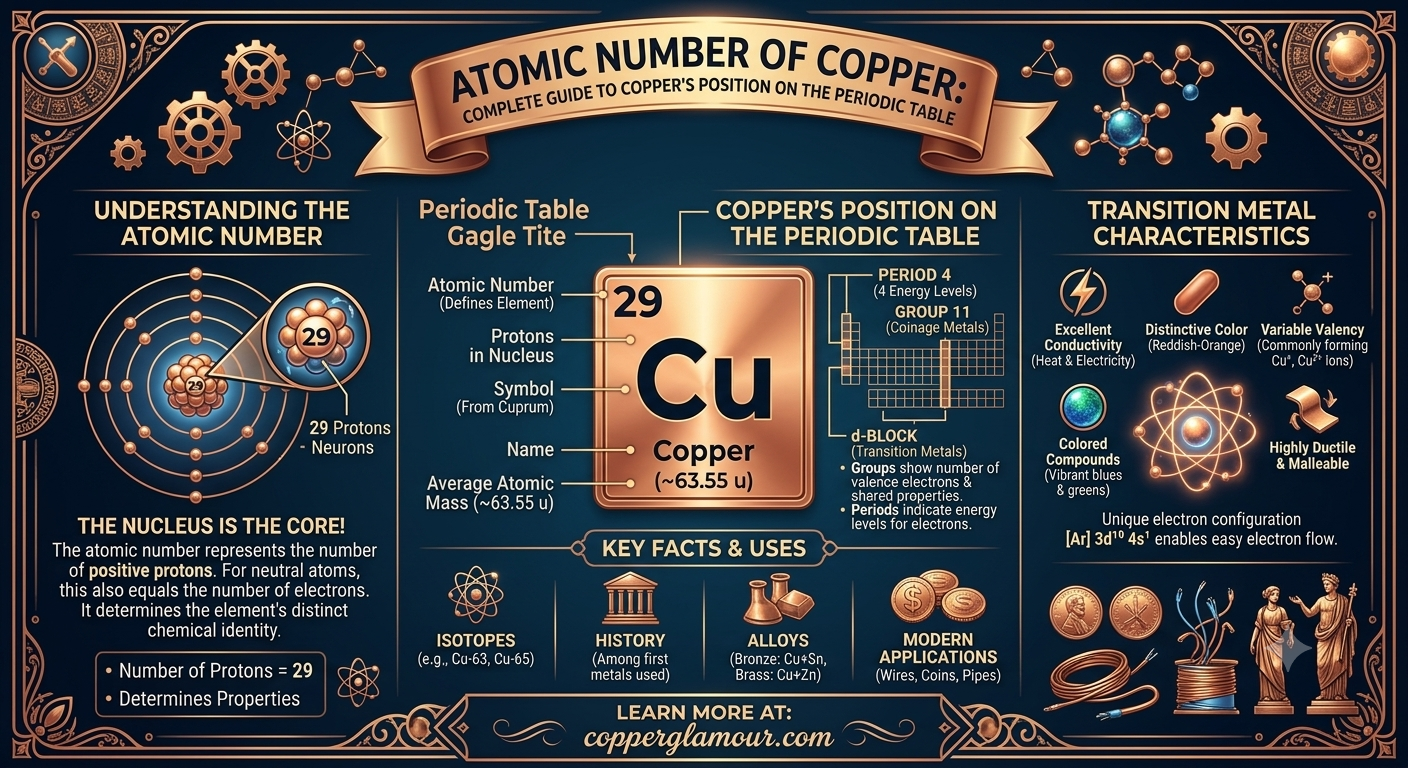
The atomic number of copper is 29, making copper one of the most important transition metals on the periodic table. The atomic number tells us that every copper atom contains 29 protons in its nucleus, a defining characteristic that distinguishes copper from every other chemical element.

At Copper Glamour, we celebrate copper not only for its timeless beauty in handcrafted jewelry and home décor but also for the fascinating science behind this remarkable metal. From elegant copper bracelets and mugs to decorative kitchenware, copper continues to combine artistic appeal with exceptional functionality.
According to Wikipedia’s article on Copper, copper has been used by civilizations for more than 10,000 years and remains essential in engineering, architecture, renewable energy, electronics, and artisan craftsmanship.
Explore the Copper Glamour Collection to discover handcrafted copper products inspired by one of the world’s most versatile metals.
What Is the Atomic Number of Copper?
The atomic number of copper is 29.
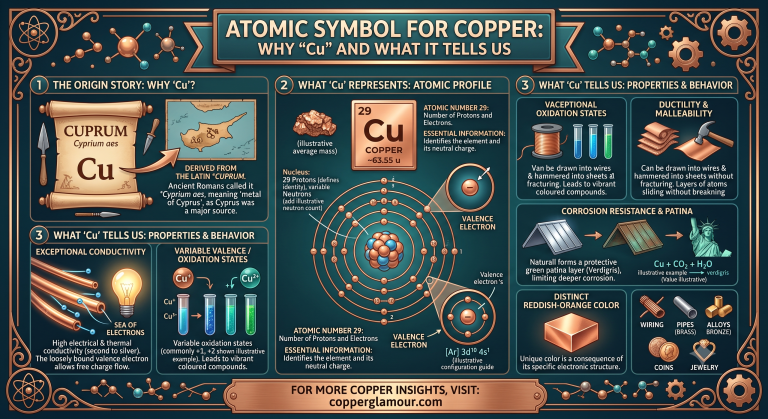
An element’s atomic number represents the number of protons found inside the nucleus of every atom of that element. Because each copper atom contains exactly 29 protons, copper is always identified by the atomic number 29.
This number never changes for copper. If the number of protons were different, the atom would belong to an entirely different element.
Understanding the Copper Atom
A copper atom is the smallest unit of copper that still retains the element’s chemical and physical properties.
Every neutral copper atom contains:
- 29 protons
- 29 electrons
- Usually 34 or 36 neutrons, depending on the naturally occurring isotope
These subatomic particles determine copper’s identity, stability, and behavior.
Copper atoms bond together in a metallic crystal structure that gives the metal its remarkable strength, flexibility, conductivity, and durability.
What Element Is Cu?
Many people ask, what element is Cu?
The answer is copper.
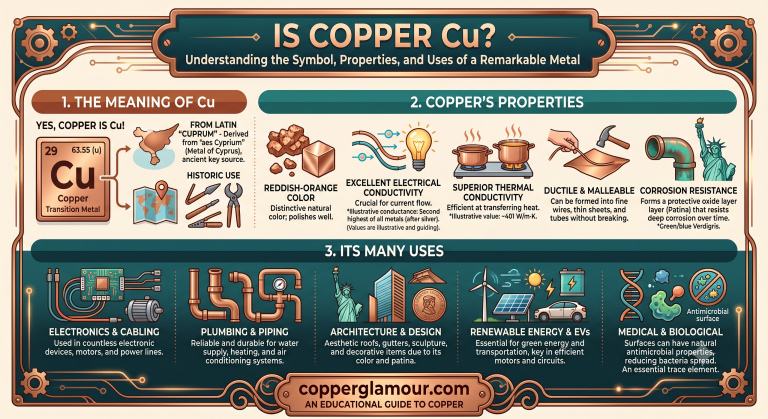
The symbol Cu comes from the Latin word Cuprum, the historical name for copper. Scientists throughout the world use Cu as the standardized abbreviation for copper in textbooks, research papers, engineering drawings, and chemical equations.
Chemical Symbol for Copper
The chemical symbol for copper is Cu.
Likewise, if someone asks, is copper Cu?, the answer is yes. The letters Cu uniquely identify copper on the periodic table and in scientific notation.
Using standardized symbols allows scientists from different countries to communicate clearly regardless of language.
Where Copper Appears on the Periodic Table
Copper occupies an important position on the periodic table.
Its key characteristics include:
- Element: Copper
- Symbol: Cu
- Atomic Number: 29
- Group: 11
- Period: 4
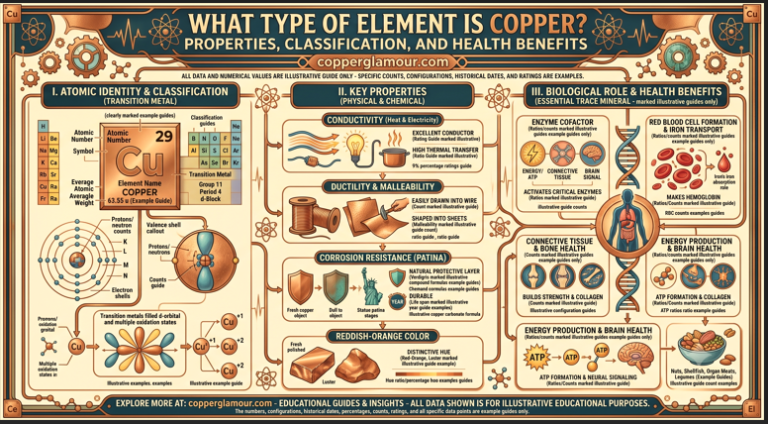
- Classification: Transition metal
These classifications explain many of copper’s unique chemical and physical properties.
Electron Configuration of Copper
Copper has a distinctive electron arrangement that contributes to its exceptional conductivity.
Its electron configuration is:
[Ar] 3d¹⁰ 4s¹
This unusually stable arrangement allows copper to conduct electricity and heat extremely efficiently, making it indispensable in modern technology.
Properties of Copper
The outstanding properties of copper explain why it remains one of the world’s most valuable engineering and decorative materials.
Copper offers:
- Excellent electrical conductivity
- Outstanding thermal conductivity
- High corrosion resistance
- Attractive reddish-orange appearance
- Excellent malleability
- High ductility
- Long service life
- Excellent recyclability
- Natural antimicrobial properties on many surfaces
These characteristics make copper suitable for electrical wiring, renewable energy systems, electronics, cookware, architecture, plumbing, transportation, and handcrafted jewelry.
The American Chemical Society (ACS) provides additional educational information about copper’s chemistry, atomic structure, and industrial applications.
Copper Is a Metal
Many people ask whether copper is a metal.
Yes. Copper is a metal, specifically a transition metal.
It is valued because it combines strength, flexibility, corrosion resistance, and exceptional conductivity. Unlike iron, copper forms a protective patina rather than rusting, allowing many copper products to remain functional and attractive for decades.
Materials Copper Is Used In
The list of materials copper is used in continues to expand as technology advances.
Copper is commonly found in:
- Electrical wiring
- Electronic circuits
- Renewable energy equipment
- Solar panels
- Electric vehicles
- Plumbing systems
- Roofing
- Industrial machinery
- Kitchen cookware
- Decorative home accessories
- Coins
- Handcrafted jewelry
Its combination of durability and conductivity makes copper one of the world’s most valuable industrial metals.
Research available through PubMed explores copper’s physical properties and scientific applications, while the National Institutes of Health Office of Dietary Supplements provides educational information about copper’s role as an essential trace mineral.
Copper in Artisan Craftsmanship
Beyond industry, copper has become increasingly popular among artisans because of its warm natural color and outstanding workability.
Copper is frequently used to create handcrafted bracelets, necklaces, mugs, bowls, kettles, wall art, and decorative accessories. Over time, many copper pieces develop a beautiful natural patina that enhances their character and uniqueness.
Browse the handcrafted collections at Copper Glamour to discover artisan copper products designed to combine timeless craftsmanship with modern American style.
Frequently Asked Questions
What is the atomic number of copper?
The atomic number of copper is 29.
What element is Cu?
Cu is the chemical symbol for copper.
What is the chemical symbol for copper?
The chemical symbol for copper is Cu.
Is copper Cu?
Yes. Copper is represented by the symbol Cu on the periodic table.
Is copper a metal?
Yes. Copper is a transition metal known for its durability, conductivity, and corrosion resistance.
What are the properties of copper?
Copper is highly conductive, corrosion resistant, malleable, ductile, recyclable, durable, and naturally develops a protective patina over time.
Final Thoughts
The atomic number of copper is 29, a defining characteristic that identifies every copper atom and distinguishes this remarkable element from all others on the periodic table. Combined with its chemical symbol Cu, exceptional conductivity, durability, and versatility, copper continues to play an essential role in science, engineering, artisan craftsmanship, and everyday life. Whether appreciated for its beauty or its performance, copper remains one of the world’s most valuable and enduring materials.
Discover handcrafted copper jewelry, mugs, cookware, and artisan accessories at Copper Glamour.