Atomic No of Cu, Understanding Copper’s Atomic Number and Chemical Properties
Atomic No of Cu
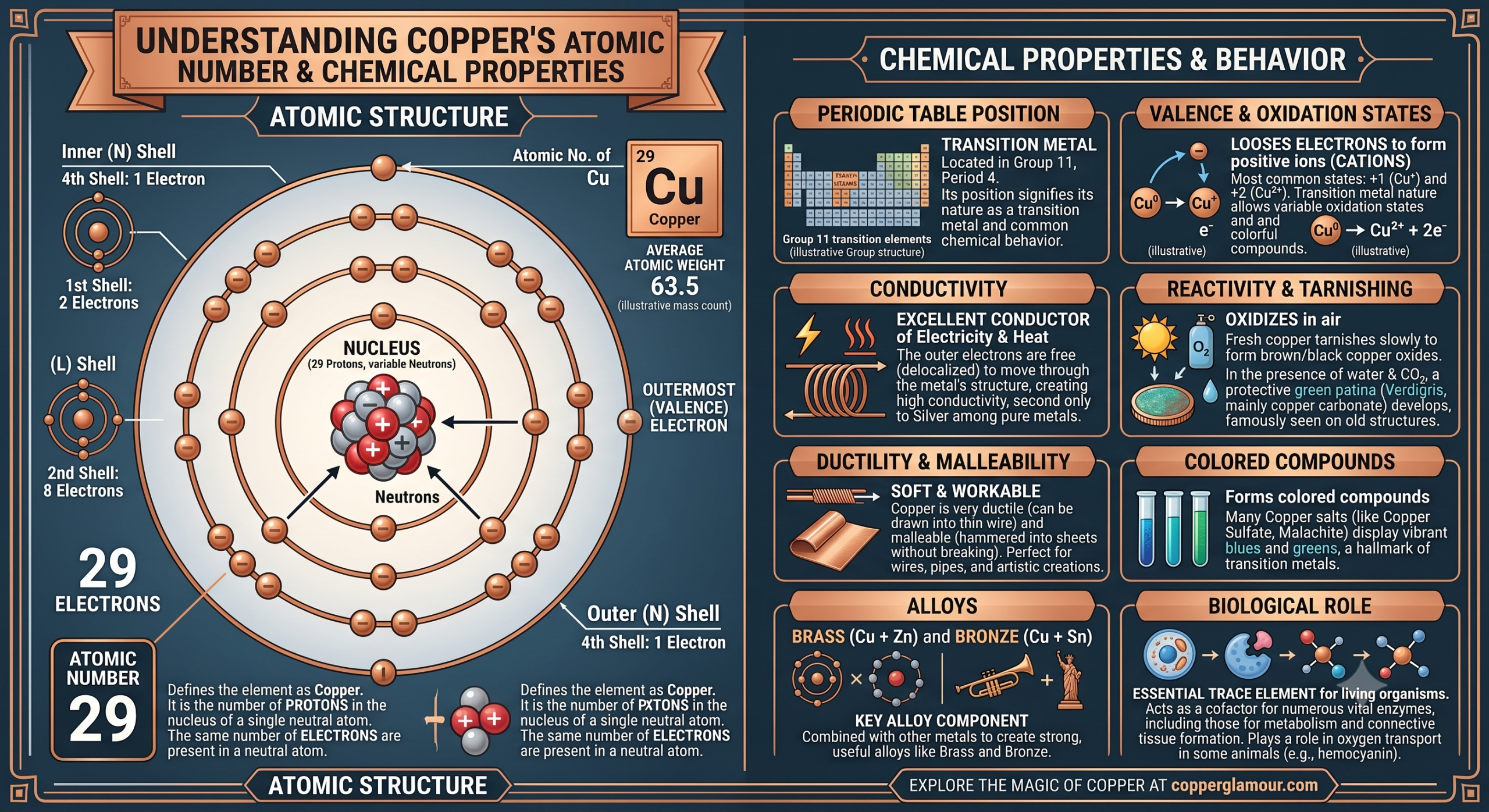
The atomic no of Cu is 29, meaning every copper atom contains 29 protons in its nucleus. Copper is one of the most important transition metals on the periodic table and has been used by humans for thousands of years in jewelry, architecture, cookware, electrical wiring, coins, and countless industrial applications.
At Copper Glamour, we appreciate not only the beauty of copper in handcrafted jewelry and home décor but also the fascinating science behind this remarkable metal. Understanding copper’s atomic structure helps explain why it remains one of the world’s most versatile and valuable materials.
According to Wikipedia’s article on Copper, copper is represented by the symbol Cu, belongs to the transition metals, and is well known for its excellent electrical conductivity, durability, and corrosion resistance.
Explore the Copper Glamour Collection to discover handcrafted copper jewelry, bracelets, necklaces, mugs, kettles, and artisan accessories inspired by this extraordinary element.
What Is the Atomic Number of Copper?
The atomic number of copper is 29.
The atomic number identifies the number of protons found inside the nucleus of every atom of a particular element. Since every copper atom contains exactly 29 protons, its atomic number is always 29.
Scientists use the atomic number to distinguish one element from another because no two different elements have the same number of protons.
Understanding the Copper Atom
A copper atom is the smallest unit of copper that still retains the chemical characteristics of the element.
Every neutral copper atom contains:
- 29 protons
- 29 electrons
- Usually 34 or 36 neutrons, depending on the naturally occurring isotope
The arrangement of these particles gives copper its unique physical and chemical properties.
Copper atoms bond together in a crystalline metallic structure, giving copper its famous strength, flexibility, and conductivity.
What Element Is Cu?
Many people ask, what element is Cu?
The answer is copper.
The symbol Cu comes from the Latin word Cuprum, which was derived from the ancient name for Cyprus, an island famous for copper mining in antiquity.
Copper has played an important role in civilization for over 10,000 years and remains essential in modern engineering, renewable energy, electronics, plumbing, architecture, and decorative arts.
Chemical Symbol for Copper
The chemical symbol for copper is Cu.
The copper element symbol and the copper periodic symbol are both Cu. This internationally recognized abbreviation is used by scientists, engineers, educators, and manufacturers around the world.
Every element on the periodic table has its own unique chemical symbol, allowing chemical formulas and scientific notation to remain concise and universally understood.
Where Copper Appears on the Periodic Table
Copper belongs to the transition metals located in:
- Atomic Number: 29
- Symbol: Cu
- Group: 11
- Period: 4
- Block: d-block
- Classification: Transition metal
Its position on the periodic table reflects its electronic structure, which contributes to its remarkable conductivity and durability.
Electron Configuration of Copper
Copper has one of the more interesting electron configurations among transition metals because it adopts a particularly stable arrangement.
Its electron configuration is:
[Ar] 3d¹⁰ 4s¹
This stable arrangement contributes to copper’s outstanding electrical and thermal conductivity, making it indispensable in electrical systems and modern technology.
Properties of Copper
Copper possesses numerous characteristics that explain its widespread use throughout history.
Some important properties of copper include:
- Excellent electrical conductivity
- Outstanding thermal conductivity
- High corrosion resistance
- Attractive reddish-orange appearance
- Excellent malleability
- High ductility
- Easy fabrication
- Long service life
- Natural antimicrobial properties on many surfaces
These qualities make copper valuable not only in industrial applications but also in handcrafted jewelry, cookware, decorative items, and architectural features.
The American Chemical Society (ACS) provides extensive educational resources explaining copper’s chemistry, atomic structure, and practical applications.
Copper Is a Metal
Many people ask whether copper is a metal.
The answer is yes.
Copper is a transition metal known for its exceptional balance of strength, flexibility, conductivity, and corrosion resistance. Unlike iron, copper develops a protective patina instead of rusting, helping preserve its appearance and durability over time.
Because of these qualities, copper remains one of the world’s most important engineering and decorative metals.
Copper in Jewelry and Everyday Life
Copper has become increasingly popular in artisan jewelry because of its warm natural color and ability to complement silver, gemstones, leather, and other materials.
Many handcrafted bracelets, necklaces, rings, pendants, mugs, and decorative accessories feature pure copper or copper alloys.
Its attractive appearance and excellent workability allow artisans to create intricate designs while maintaining lasting durability.
Browse the handcrafted collections available through Copper Glamour to explore artisan copper jewelry inspired by centuries of traditional craftsmanship.
Scientific Importance of Copper
Copper plays an essential role in both technology and biology.
Scientists continue studying copper because it is used extensively in renewable energy systems, electric vehicles, telecommunications, medical equipment, sustainable architecture, and advanced manufacturing.
Research available through PubMed explores copper’s physical properties, materials science, and biological importance, while the National Institutes of Health Office of Dietary Supplements provides educational information regarding copper as an essential trace mineral.
Why Understanding Copper Matters
Learning about the atomic number of copper, its chemical symbol, and its physical characteristics helps us better appreciate one of the world’s oldest and most useful metals.
From handcrafted jewelry to renewable energy infrastructure, copper continues to improve everyday life through its unique combination of beauty, strength, and scientific importance.
Whether admired for its artistic appeal or valued for its engineering performance, copper remains an extraordinary element with lasting significance.
Frequently Asked Questions
What is the atomic no of Cu?
The atomic no of Cu is 29.
What is the atomic number of copper?
The atomic number of copper is 29, meaning every copper atom contains 29 protons.
What element is Cu?
Cu is the chemical symbol for copper.
What is the chemical symbol for copper?
The chemical symbol for copper is Cu.
Is copper a metal?
Yes. Copper is a transition metal known for its durability, conductivity, and corrosion resistance.
What are the properties of copper?
Copper is highly conductive, corrosion resistant, malleable, ductile, durable, and naturally develops a protective patina over time.
Final Thoughts
The atomic no of Cu is 29, a defining characteristic that identifies copper on the periodic table and distinguishes it from every other element. Copper’s remarkable properties—including durability, conductivity, malleability, and timeless beauty—have made it indispensable for thousands of years. From handcrafted jewelry to advanced engineering, this remarkable metal continues to shape the modern world.
Discover handcrafted copper products inspired by this extraordinary element at Copper Glamour.