12 Piece Stainless Steel Cookware Set: Complete USA Buying Guide
A 12 piece stainless steel cookware set can provide the essential pots, pans, and lids needed for everyday cooking in one coordinated collection. Stainless steel cookware remains popular because it is durable, versatile, relatively easy to maintain, and suitable for many cooking methods. However, buyers should look beyond the number of pieces. Construction, pan sizes, handle design, steel grade, base thickness, and cooktop compatibility can matter much more.
For USA households building a functional yet attractive kitchen, stainless steel also pairs naturally with warm metallic accents. At Copper Glamour, shoppers can explore copper kitchenware, drinkware, serving pieces, jewelry, and home décor that complement modern stainless steel kitchens.
Before choosing a cookware collection, it helps to understand exactly what the advertised piece count means and how stainless steel construction affects everyday cooking.
What Is a 12 Piece Stainless Steel Cookware Set?
A 12 piece stainless steel cookware set is a bundled collection of stainless steel cooking vessels, lids, and sometimes accessories. However, a 12-piece package does not necessarily contain 12 individual pots and pans.
For example, a manufacturer might include several saucepans, two frying pans, a stockpot, and matching lids. Each lid may count as a separate piece.
Therefore, examine the complete contents before purchasing. A thoughtfully selected eight-piece collection may sometimes provide more useful cookware than a poorly configured 12-piece package.
What Comes in a PC Cookware Set Stainless Collection?
People searching for a pc cookware set stainless option will find considerable variation between manufacturers.
A typical collection may contain saucepans, frying pans, sauté pans, stockpots, and fitted lids. Additionally, some manufacturers include steamers or cooking utensils.
Rather than focusing only on quantity, consider which pans match your cooking habits. For example, someone who frequently prepares pasta may benefit from a large stockpot. Meanwhile, a household that regularly sears meat may value a substantial stainless steel skillet.
Consequently, useful sizes should take priority over a large advertised piece count.
Why Choose Stainless Steel Cookware?
Stainless steel offers several characteristics that make it practical for kitchens.
First, quality stainless steel resists corrosion and staining under normal kitchen conditions. Furthermore, its surface does not require seasoning in the same way as traditional cast iron.
Another advantage is versatility. Stainless steel cookware works well for browning, sautéing, boiling, simmering, and making sauces.
It also creates an attractive professional appearance. Therefore, stainless steel can work equally well in traditional and contemporary kitchens.
The Encyclopaedia Britannica guide to stainless steel provides additional background on stainless steel and the characteristics that distinguish it from ordinary steel.
Understanding a 12 Piece Stainless Steel Pan Set
A 12 piece stainless steel pan set should provide cookware that serves different purposes rather than simply repeating similar sizes.
For example, small saucepans work well for sauces and smaller portions. Larger pots handle pasta, soups, and stews. Meanwhile, frying and sauté pans provide broad cooking surfaces for browning food.
However, stainless steel itself does not conduct heat as effectively as materials such as aluminum or copper. Consequently, many quality cookware manufacturers combine stainless steel with a conductive inner layer.
This construction can improve heat distribution while retaining the durability of a stainless cooking surface.
Fully Clad vs Disc-Bottom Cookware
Construction deserves close attention when comparing cookware sets.
Fully clad cookware typically contains layers that extend through the bottom and sides of the pan. For example, manufacturers may sandwich aluminum between stainless steel layers.
As a result, heat can spread beyond the base and into the walls.
Disc-bottom cookware takes a different approach. Manufacturers attach a conductive disc to the bottom of the vessel while leaving the sidewalls primarily stainless steel.
Both designs can perform well. However, their heating characteristics, weight, price, and intended uses may differ.
14 Inch Stainless Steel Skillet With Lid
A 14 inch stainless steel skillet with lid provides significantly more cooking area than smaller frying pans.
Therefore, it can be particularly useful for:
- Large family meals
- Searing several portions
- One-pan dinners
- Large batches of vegetables
- Shallow braising
- Cooking for guests
The lid also increases versatility. For example, covering the skillet can help retain moisture during certain cooking methods.
However, a 14-inch skillet requires considerable burner and storage space. Measure your cooktop and cabinets before buying one.
Stainless Steel Fry Pan 14 Inch: Is Bigger Better?
A stainless steel fry pan 14 inch in diameter can be extremely useful, but larger does not automatically mean better.
A pan that extends far beyond a small burner may heat less evenly across its entire cooking surface. Furthermore, large stainless steel pans become heavy once filled with food.
For smaller households, a 10- or 12-inch skillet may handle most daily cooking tasks more conveniently. In contrast, larger families and people who entertain regularly may appreciate the additional surface provided by a 14-inch pan.
Therefore, choose pan size according to both your cooking habits and your stove.
What Does Stainless Steel Gauge Mean?
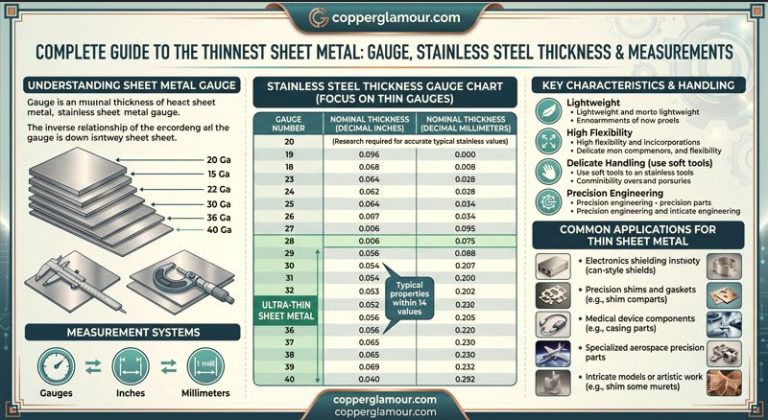
Stainless steel gauge is a system used to describe sheet-metal thickness. However, an important detail often surprises shoppers: in many traditional gauge systems, a smaller gauge number represents thicker material.
For example, 16-gauge steel is thicker than a higher-number gauge within the same applicable gauge standard.
Nevertheless, gauge can become confusing because thickness depends on the material and gauge system being referenced. Therefore, you should not assume that one gauge number represents exactly the same thickness across every type of metal.
For cookware, manufacturers may instead provide thickness directly in millimeters. That measurement can make product comparisons easier.
16 Gauge Stainless Steel Thickness
The phrase 16 gauge stainless steel thickness often appears when consumers research fabrication, sinks, worktables, equipment, and metal products.
Under the commonly used U.S. Manufacturers’ Standard Gauge convention for stainless steel sheet, 16 gauge is approximately 0.0598 inches, or about 1.52 mm thick.
However, gauge alone should not determine whether cookware is high quality. Modern cookware may contain multiple layers made from different metals. Consequently, total wall construction and the thickness of individual layers can matter more than a single gauge measurement.
For technical information on stainless steel and material standards, the National Institute of Standards and Technology provides extensive resources related to materials and measurement science.
What Is the Thinnest Sheet Metal?
There is no single universal answer to thinnest sheet metal because manufacturers can produce extremely thin metal foils for specialized industrial applications.
Additionally, the distinction between sheet and foil varies by material and industry.
For ordinary household products, extremely thin material is not automatically desirable. A cooking vessel needs enough structural strength to resist deformation during regular heating, cooling, lifting, and washing.
Therefore, consumers should focus on the overall construction of cookware rather than simply looking for the thinnest or thickest metal.
Understanding 7ga Steel Thickness
7ga steel thickness is substantially greater than the material commonly associated with household cookware.
Furthermore, gauge values differ according to the specific material standard. Under a commonly used U.S. standard for sheet steel, 7-gauge steel is approximately 0.1793 inches, or about 4.55 mm thick.
That level of thickness is more relevant to fabrication and heavy-duty metal applications than ordinary cookware walls.
Consequently, someone comparing cookware should avoid treating every steel gauge measurement as directly interchangeable.
Does Thicker Stainless Steel Mean Better Cookware?
Not necessarily.
Thickness contributes to durability and heat behavior, but cookware performance depends on several factors working together.
For example, consider:
- Stainless steel grade
- Aluminum or copper core
- Number of layers
- Base construction
- Wall thickness
- Handle attachment
- Manufacturing quality
- Pan geometry
A very thick pan may retain considerable heat but also become heavy. Conversely, extremely thin cookware may heat rapidly while becoming more vulnerable to uneven heating or deformation.
Therefore, balanced construction is usually more useful than thickness alone.
Stainless Steel and Copper Cookware
Copper and stainless steel can complement each other in cookware construction and kitchen design.
Copper conducts heat effectively, while stainless steel provides a durable cooking surface. Consequently, some premium cookware combines these materials in layered construction.
Copper also creates a striking decorative contrast with stainless appliances and cookware. Warm copper tones can soften the cooler appearance of stainless steel while adding visual character.
According to the Royal Society of Chemistry’s copper resource, copper has excellent thermal and electrical conductivity, which helps explain its long history in cookware and numerous industrial applications.
You can explore copper kitchenware and complementary home pieces from Copper Glamour.
How to Choose Stainless Steel Cookware
Begin with construction rather than appearance.
A well-designed pan should feel sturdy without becoming unnecessarily difficult to lift. Additionally, the handle should provide a secure grip and remain firmly attached.
Next, examine the base. Multi-layer construction can improve heat distribution, particularly when a conductive metal such as aluminum or copper forms part of the structure.
Also check cooktop compatibility. For example, induction cooktops require cookware with suitable magnetic properties.
Finally, review the manufacturer’s oven-temperature limits. Lids and handles may have different temperature restrictions from the stainless steel body.
Cooking With Stainless Steel
Stainless steel can produce excellent browning when used correctly.
Start by preheating the pan gradually. Next, add an appropriate cooking fat before introducing food when the recipe calls for it.
Furthermore, avoid overcrowding the cooking surface. Too much food can lower the pan temperature and increase moisture, which may interfere with browning.
Allow proteins to develop a crust before attempting to move them. Often, properly browned food releases from the cooking surface more easily.
With practice, stainless steel becomes an extremely versatile cooking material.
Caring for a Stainless Steel Cookware Set
Proper maintenance helps quality cookware retain its appearance and performance.
Allow hot cookware to cool before exposing it to dramatically colder water. Sudden temperature changes can place unnecessary stress on some pans.
Additionally, use non-abrasive cleaning methods when possible. For stubborn residue, soaking the pan in warm water can make cleaning easier.
Water spots may sometimes appear after washing. Therefore, drying cookware with a soft cloth can help preserve its polished appearance.
Always follow the manufacturer’s specific care instructions.
Where to Buy a 12 Piece Stainless Steel Cookware Set in the USA
USA shoppers can find cookware sets through kitchen specialty stores, department stores, manufacturer websites, home retailers, and major online marketplaces.
Before purchasing, compare the actual included pieces rather than relying on the number printed on the box. Moreover, examine warranty coverage, construction, dimensions, cooktop compatibility, and customer support.
For kitchens that combine stainless steel with warmer metallic accents, explore handcrafted kitchenware, serving accessories, drinkware, and home pieces from Copper Glamour.
Frequently Asked Questions
Is a 12 piece stainless steel cookware set worth it?
It can be an excellent choice when the included pots and pans match your cooking habits. However, check whether lids and accessories contribute to the advertised 12-piece count.
Is a 14 inch stainless steel skillet with lid too large?
It depends on your kitchen. A 14-inch skillet offers plenty of cooking space, although it requires a sufficiently large burner, cabinet, and sink.
What is 16 gauge stainless steel thickness?
Under a commonly used U.S. gauge convention for stainless steel sheet, 16 gauge is approximately 0.0598 inches or 1.52 mm thick. Gauge specifications should always be interpreted according to the relevant material standard.
What does stainless steel gauge mean?
Gauge describes metal thickness under a defined system. Generally, lower gauge numbers represent thicker sheet within the same gauge standard.
Is thicker stainless steel cookware always better?
No. Thickness matters, but construction, heat-conducting layers, steel quality, balance, and manufacturing standards also influence cookware performance.
What is 7ga steel thickness?
Under a common U.S. sheet-steel gauge convention, 7 gauge is approximately 0.1793 inches or 4.55 mm thick. However, always verify the applicable gauge standard before using the figure for technical work.
Can stainless steel cookware contain copper?
Yes. Some multi-layer cookware incorporates copper as a heat-conducting layer while using stainless steel for the cooking surface.
Final Thoughts
A 12 piece stainless steel cookware set can provide a versatile foundation for an American kitchen, but piece count should never be the only consideration. Instead, examine construction, useful pan sizes, handle comfort, cooktop compatibility, and overall durability.
Meanwhile, larger cookware such as a 14 inch stainless steel skillet with lid can provide valuable additional cooking space for families and entertaining. Understanding stainless steel gauge, 16-gauge thickness, and related measurements can also make technical product specifications easier to interpret.
Finally, stainless steel does not need to dominate your entire kitchen design. Combining its clean appearance with the warmer character of copper can create a distinctive and inviting space. Explore handcrafted kitchenware, drinkware, serveware, jewelry, and decorative pieces from Copper Glamour.