What Is the Symbol for the Following Element: Copper? Meaning, Properties, and Uses
What Is the Symbol for the Following Element: Copper?
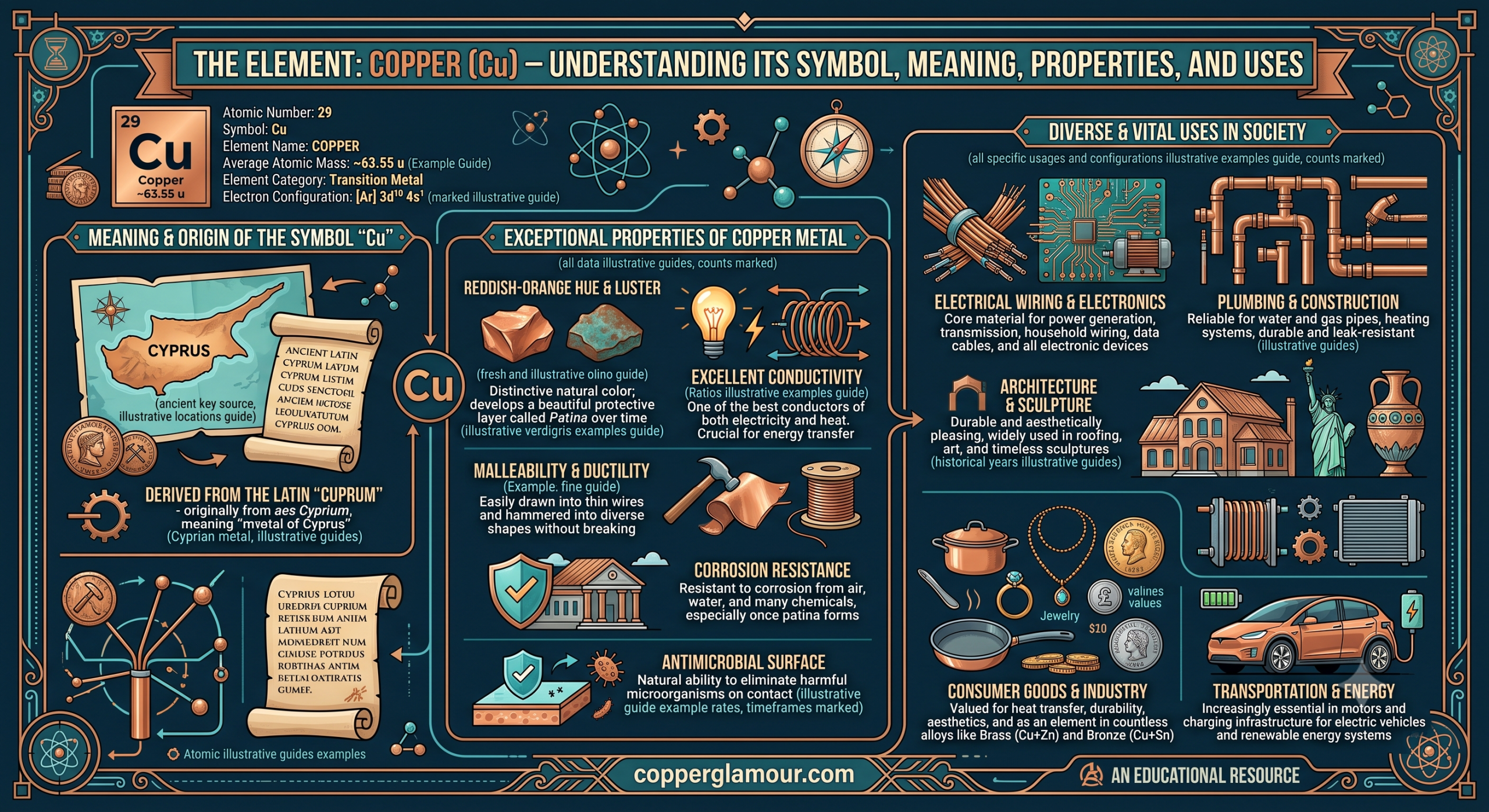
If you’re asking what is the symbol for the following element: copper, the answer is Cu. The symbol Cu comes from the Latin word Cuprum, which evolved from the ancient phrase aes Cyprium, meaning “metal of Cyprus.” Ancient Cyprus was well known for its rich copper deposits, and the Latin name has remained part of scientific terminology for centuries.
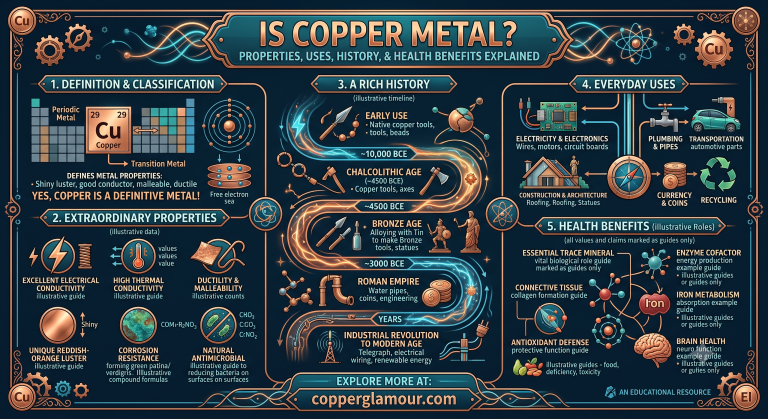
Copper is a naturally occurring transition metal with the atomic number 29. It is valued for its outstanding electrical conductivity, corrosion resistance, thermal conductivity, and durability, making it one of the most important metals used in modern industries.
At Copper Glamour, we celebrate copper’s beauty and versatility through handcrafted jewelry, drinkware, cookware, and elegant home décor.
According to Wikipedia’s article on Copper, copper has been used by humans for over 10,000 years and remains one of the world’s most important engineering metals.
Browse the Copper Glamour Collection to explore artisan-crafted copper products.
Why Is Copper’s Symbol Cu?
Unlike many element symbols that closely match their English names, copper’s symbol comes from its Latin name.
The historical progression is:
- Aes Cyprium – “Metal of Cyprus”
- Cuprum – Latin
- Cu – Modern chemical symbol
Scientists use Cu worldwide because scientific element symbols are based primarily on Latin or historical names.
Copper’s Basic Scientific Information
Copper has several defining characteristics.
- Element name: Copper
- Chemical symbol: Cu
- Atomic number: 29
- Atomic mass: 63.546 u
- Group: 11
- Period: 4
- Classification: Transition metal
These properties make copper one of the most useful elements in engineering, construction, and technology.
Chemical Properties of Copper
Copper exhibits several important chemical characteristics.
For example, copper:
- Forms a thin protective oxide layer.
- Commonly has oxidation states of +1 and +2.
- Resists corrosion in many environments.
- Forms alloys such as brass and bronze.
- Conducts electricity and heat exceptionally well.
Because of these properties, copper continues to be essential in electrical systems, renewable energy, electronics, and industrial manufacturing.
The American Chemical Society (ACS) provides educational information about copper’s chemistry and materials science.
Copper’s Physical State
Under normal atmospheric conditions, copper exists as a solid.
Its physical properties include:
- Reddish-orange appearance
- Excellent ductility
- High malleability
- Melting point: 1,084°C (1,983°F)
- Boiling point: 2,562°C (4,644°F)
Consequently, copper remains durable and reliable in a wide variety of industrial and consumer applications.
Copper as an Essential Nutrient
Copper is also an essential trace mineral required by the human body.
Although some people refer to copper alongside vitamins, copper is not a vitamin. Instead, it supports many normal biological functions, including:
- Iron metabolism
- Connective tissue formation
- Energy production
- Nervous system function
- Immune function
- Antioxidant enzyme activity
The National Institutes of Health Office of Dietary Supplements provides evidence-based guidance on dietary copper, recommended intake levels, and food sources.
Copper Amino Acid Chelate
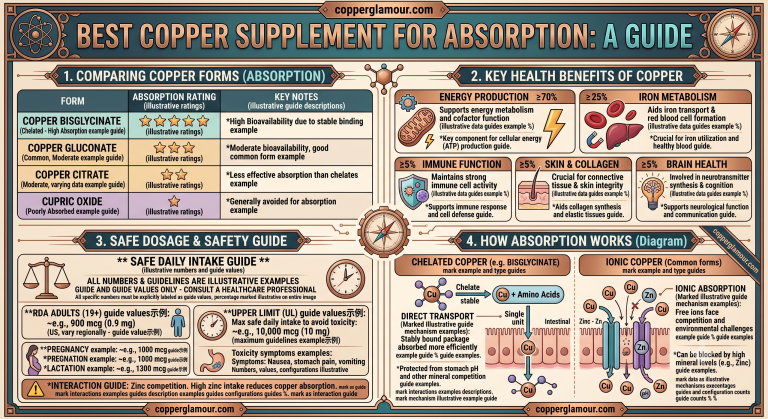
Copper amino acid chelate is a supplemental form in which copper is bound to amino acids. Chelated minerals are commonly used because they may improve absorption compared with some non-chelated forms.
Copper Supplements
Copper supplements are available in many forms, including:
- Copper tablets
- Copper pills
- Copper capsules
- Copper glycinate
- Copper gluconate
- Copper citrate
- Copper amino acid chelate
- Liquid copper supplement
The best copper supplement varies depending on an individual’s nutritional needs, dietary intake, and healthcare advice.
Copper Glycinate Benefits
Copper glycinate, also called copper bisglycinate, combines copper with the amino acid glycine.
Potential benefits include supporting:
- Normal iron metabolism
- Healthy connective tissue
- Collagen formation
- Nervous system function
- Energy metabolism
Current research continues to evaluate the absorption and effectiveness of different supplemental forms.
Copper 2 mg Supplements
Many dietary supplements provide 2 mg of copper per serving. Whether this amount is suitable depends on factors such as age, overall diet, medical history, and individual nutritional requirements. It is important to avoid excessive copper intake unless directed by a healthcare professional.
Research published through PubMed continues to investigate copper’s role in nutrition and human health.
Everyday Uses of Copper
Copper’s unique properties make it indispensable in modern life.
Manufacturers use copper in:
- Electrical wiring
- Solar panels
- Wind turbines
- Electric vehicles
- Plumbing systems
- Telecommunications
- Industrial equipment
- Roofing
- Kitchen cookware
- Jewelry
- Decorative home accessories
Furthermore, copper is one of the world’s most recyclable metals because it can be reused repeatedly without losing its valuable properties.
Copper in Artisan Craftsmanship
Copper has inspired artisans for centuries because it combines natural beauty with exceptional durability.
Today, handcrafted mugs, kettles, bowls, bracelets, necklaces, and decorative accessories remain popular around the world. As these products age, they often develop a beautiful patina that enhances their appearance while helping protect the metal beneath.
Discover handcrafted collections at Copper Glamour, where traditional craftsmanship meets modern American design.
Frequently Asked Questions
What is the symbol for copper?
The official chemical symbol for copper is Cu.
Why is copper’s symbol Cu instead of Co?
Copper’s symbol comes from the Latin word Cuprum, while Co is the symbol for cobalt.
Is copper a vitamin?
No. Copper is an essential trace mineral, not a vitamin.
What are copper glycinate benefits?
Copper glycinate may support normal mineral absorption, collagen formation, iron metabolism, connective tissue health, and nervous system function when used appropriately.
Are copper tablets and liquid supplements available?
Yes. Copper supplements are available as tablets, pills, capsules, glycinate formulations, amino acid chelates, and liquid supplements.
What is copper 2 mg?
Copper 2 mg refers to a dietary supplement that provides 2 milligrams of copper per serving.
Final Thoughts
The answer to “What is the symbol for the following element: copper?” is Cu, a symbol derived from the Latin word Cuprum. Copper’s remarkable combination of conductivity, corrosion resistance, durability, and recyclability has made it one of the most valuable elements in science, engineering, and manufacturing. Beyond its industrial importance, copper also serves as an essential trace mineral that supports normal biological functions. Whether you’re studying chemistry or exploring handcrafted copper products, understanding the significance of Cu reveals why copper continues to play such an important role in everyday life.
Discover handcrafted copper jewelry, cookware, drinkware, and home décor at Copper Glamour.