Copper Name: Origin, Meaning, History, and Scientific Facts
Copper Name
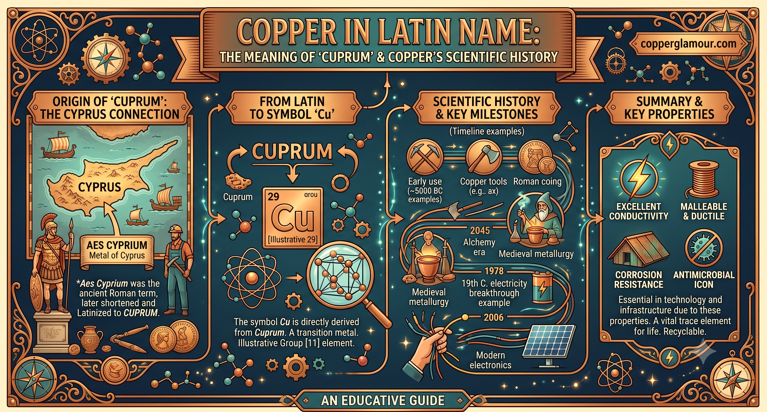
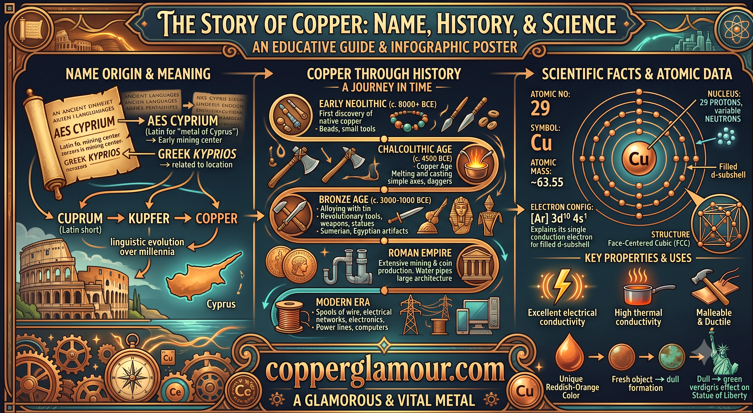
The copper name has a fascinating history that stretches back thousands of years. The modern English word copper originated from the Latin name Cuprum, which itself evolved from the phrase aes Cyprium, meaning “metal of Cyprus.” Ancient Cyprus was famous for its rich copper deposits, and the Romans associated the metal so closely with the island that its name became part of scientific history.
Today, scientists continue to use Cu, the chemical symbol derived from Cuprum, on the periodic table and in chemistry around the world.
At Copper Glamour, we celebrate copper’s rich heritage through handcrafted jewelry, mugs, cookware, and home décor that combine timeless craftsmanship with modern design.
According to Wikipedia’s article on Copper, copper has served humanity for more than 10,000 years and remains one of the world’s most important engineering and decorative metals.
Explore the Copper Glamour Collection to discover artisan-crafted copper products.
Where Does the Copper Name Come From?
The story behind the copper name begins in the ancient Mediterranean.
The Romans called the metal aes Cyprium, meaning “metal of Cyprus,” because Cyprus supplied much of the copper used throughout the Roman Empire. Later, the phrase shortened to Cuprum, which eventually evolved into coper in Old English before becoming the modern word copper.
As a result, today’s scientific symbol Cu still reflects copper’s ancient Latin heritage.
How Did Copper Get Its Name?
Copper earned its name through centuries of linguistic development.
The historical progression generally followed this path:
- Aes Cyprium (Metal of Cyprus)
- Cuprum (Latin)
- Coper (Old English)
- Copper (Modern English)
Although pronunciation changed over time, scientists preserved Cu as the official chemical symbol because it originated directly from the Latin name.
What Is the Symbol for Copper?
The official chemical symbol for copper is Cu.
Copper’s scientific identity includes:
- Element: Copper
- Chemical symbol: Cu
- Atomic number: 29
- Atomic mass: 63.546 u
- Classification: Transition metal
Scientists, engineers, manufacturers, and educators use Cu consistently across the world.
What Type of Element Is Copper?
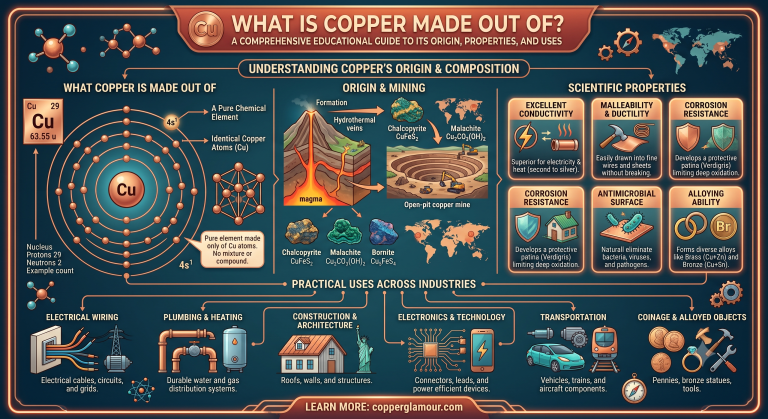
Copper is a naturally occurring chemical element.
More specifically, it belongs to the transition metals, a group of elements known for excellent conductivity, strength, and versatility.
Because copper combines these characteristics with natural corrosion resistance, manufacturers rely on it across countless industries.
What Type of Metal Is Copper?
Copper is classified as a transition metal.
It offers several outstanding physical properties, including:
- Excellent electrical conductivity
- Outstanding thermal conductivity
- High malleability
- Excellent ductility
- Strong corrosion resistance
- Outstanding recyclability
Consequently, copper remains essential for electrical systems, renewable energy, transportation, electronics, architecture, and decorative craftsmanship.
Is Copper Metal?
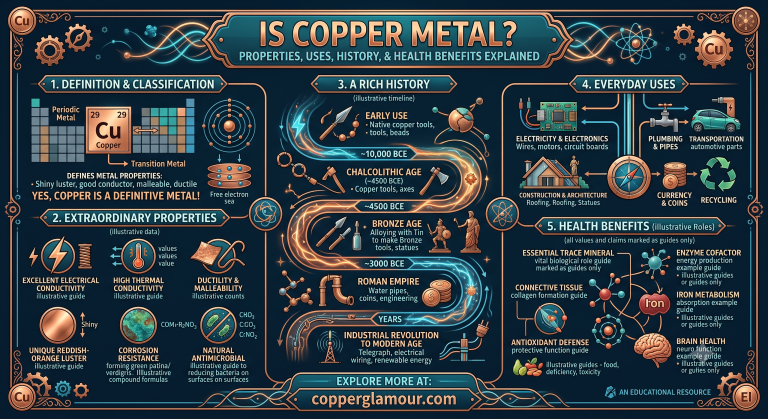
Yes, copper is a metal.
In fact, engineers value copper because it performs exceptionally well under demanding conditions while remaining easy to shape, recycle, and maintain.
What Are Copper’s Chemical Properties?
Copper possesses several important chemical characteristics.
For example, copper:
- Forms a protective oxide layer.
- Commonly exhibits oxidation states of +1 and +2.
- Resists corrosion in many environments.
- Forms durable alloys such as brass and bronze.
- Maintains long-term chemical stability.
These properties help explain why copper products often last for decades.
The American Chemical Society (ACS) provides additional educational resources about copper’s chemistry and materials science.
What Is the State of Matter of Copper?
Under ordinary conditions, copper exists as a solid.
Its melting point is approximately 1,084°C (1,983°F), while its boiling point is approximately 2,562°C (4,644°F). Therefore, copper remains solid during everyday use in homes, factories, vehicles, and electrical systems.
Copper and Human Nutrition
Copper is also an essential trace mineral required for normal human health.
Although people sometimes mention it alongside vitamins, copper is not a vitamin. Instead, the body needs small amounts of copper to support normal iron metabolism, connective tissue formation, energy production, and nervous system function.
The National Institutes of Health Office of Dietary Supplements provides evidence-based information about dietary copper, recommended intake levels, and food sources.
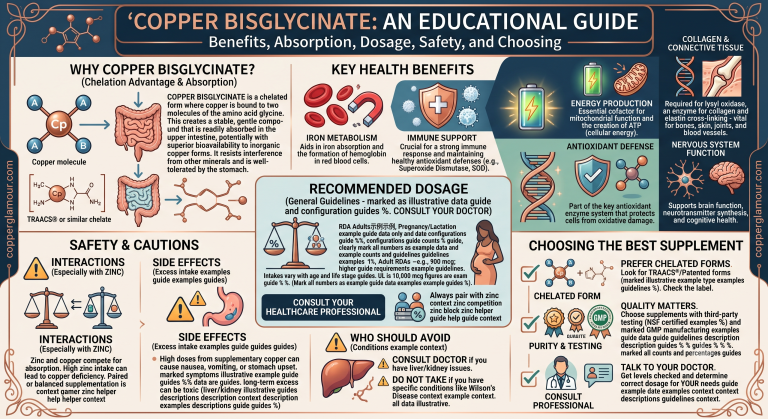
Copper Amino Acid Chelate
Manufacturers produce copper amino acid chelate by binding copper to amino acids. This form appears in some dietary supplements because amino acid chelates may support mineral absorption as part of a balanced diet.
Copper Supplements
Copper supplements come in several forms, including:
- Copper bisglycinate
- Copper gluconate
- Copper citrate
- Copper amino acid chelates
No single product is the best copper supplement for everyone. Individual nutritional needs differ, so people should follow product directions and seek professional advice if they have questions about supplementation.
Why Copper Still Matters
Copper continues to support modern society because it combines outstanding performance with long-term sustainability.
Today, industries use copper in:
- Electrical wiring
- Renewable energy systems
- Electric vehicles
- Plumbing
- Telecommunications
- Industrial equipment
- Roofing
- Cookware
- Jewelry
- Decorative home accessories
Furthermore, manufacturers can recycle copper repeatedly without reducing its performance. Consequently, copper remains one of the world’s most sustainable engineering materials.
Research available through PubMed continues to explore copper’s role in materials science and human nutrition.
Copper in Artisan Craftsmanship
Copper has inspired artisans for thousands of years because it combines beauty with exceptional durability.
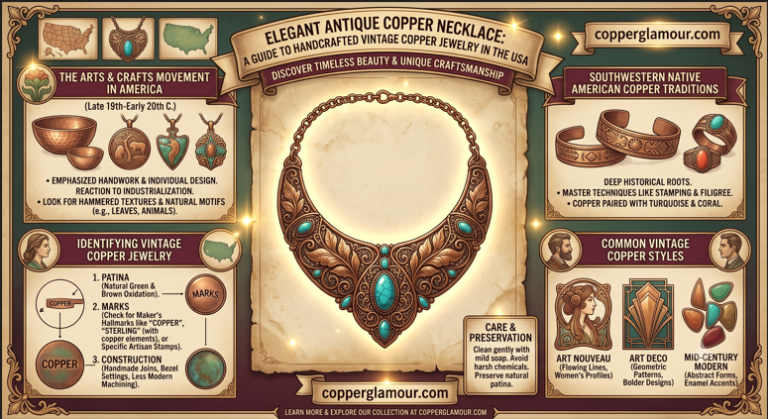
Today, skilled craftspeople create mugs, bowls, kettles, bracelets, necklaces, and decorative accessories that highlight copper’s distinctive reddish-orange color. Over time, these handcrafted products often develop a protective patina that enhances both their appearance and longevity.
Discover artisan-crafted collections at Copper Glamour, where traditional craftsmanship meets modern American design.
Frequently Asked Questions
What is the origin of the copper name?
The name comes from the Latin Cuprum, which evolved from aes Cyprium, meaning “metal of Cyprus.”
What is the symbol for copper?
The official chemical symbol for copper is Cu.
What type of metal is copper?
Copper is a transition metal known for excellent conductivity and corrosion resistance.
Is copper a metal?
Yes. Copper is a naturally occurring transition metal.
Is copper a vitamin?
No. Copper is an essential trace mineral, not a vitamin.
What state of matter is copper?
Copper exists as a solid under normal room-temperature conditions.
Final Thoughts
The copper name reflects thousands of years of history, beginning with the Latin Cuprum and the ancient phrase aes Cyprium, meaning “metal of Cyprus.” Although languages evolved over time, the chemical symbol Cu continues to preserve this remarkable heritage. Today, copper remains one of the world’s most valuable transition metals because it combines outstanding conductivity, corrosion resistance, durability, and recyclability. In addition to its importance in engineering and manufacturing, copper also serves as an essential trace mineral that supports normal human health.
Discover handcrafted copper jewelry, cookware, drinkware, and home décor at Copper Glamour.