Symptoms of Copper Overdose


Copper Glamour explains that copper overdose occurs when excessive amounts of copper accumulate in the body, potentially leading to digestive discomfort, nausea, and other health complications. Although copper is an essential trace mineral needed for red blood cell production and immune function, too much copper may become harmful. According to Wikipedia’s article on copper toxicity, copper toxicity can result from excessive supplementation, contaminated water, or occupational exposure. Canadians using copper supplements should understand proper dosage guidelines and how copper differs from heavy metal toxicities such as lead poisoning.
What Is Copper Overdose
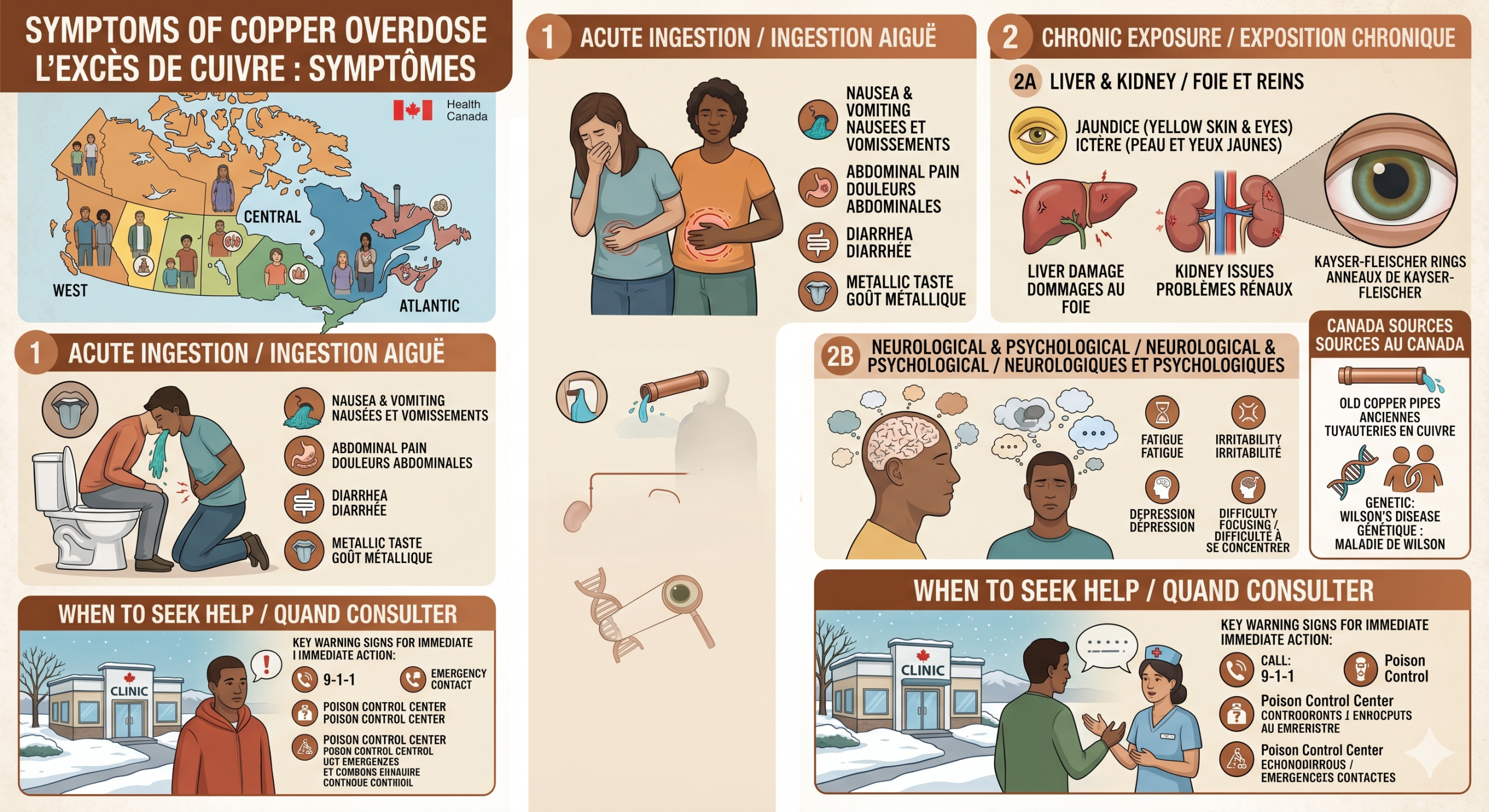
Copper overdose, also called copper toxicity, occurs when the body absorbs more copper than it can safely process or eliminate. Small amounts of copper are necessary for health, but excessive intake may affect the digestive system, liver, and nervous system.
Copper overdose can happen through:
- Excessive copper supplementation
- Contaminated drinking water
- Occupational copper exposure
- Certain genetic conditions affecting copper metabolism
Copper Overdose Symptoms


Early Symptoms of Copper Toxicity
Early copper overdose symptoms may include:
- Nausea
- Vomiting
- Stomach cramps
- Diarrhea
- Metallic taste in the mouth
These symptoms can develop shortly after consuming excessive copper.
Severe Copper Toxicity Symptoms
More severe cases may involve:
- Fatigue and weakness
- Dizziness
- Headaches
- Liver stress or liver damage
- Confusion or neurological discomfort
Persistent symptoms require immediate medical evaluation.
Copper Toxicity vs Lead Toxicity
Many people researching copper overdose also compare it with heavy metal poisoning such as lead toxicity. While both involve metal exposure, copper and lead affect the body differently.
The World Health Organization (WHO) on lead poisoning explains that lead poisoning can damage the nervous system, kidneys, and brain, especially in children.
Signs and Symptoms of Lead Toxicity
Lead toxicity symptoms may include:
- Abdominal pain
- Fatigue
- Developmental delays in children
- Headaches
- Irritability
- Memory issues
Sources of Lead Toxicity
Lead exposure may come from:
- Old lead-based paint
- Contaminated water pipes
- Industrial exposure
- Soil contamination
Unlike copper, lead has no beneficial biological function in the human body.
Chelated Copper vs Copper


Chelated copper refers to copper bound to amino acids or organic compounds to improve absorption. Common forms include copper glycinate and copper bisglycinate.
Compared to standard copper supplements, chelated copper may:
- Improve absorption
- Reduce stomach irritation
- Support better mineral balance
Canadians using copper supplements often prefer chelated forms because they are generally gentler on digestion when taken properly.
Treatment and Management of Copper Overdose
Treatment depends on the severity of the overdose. Common management approaches may include:
- Stopping copper supplementation immediately
- Drinking clean water to stay hydrated
- Seeking medical evaluation
- Monitoring liver function in severe cases
In some situations, healthcare providers may use medical chelation therapy to remove excess metals from the body.
Copper Awareness and Supplement Safety in Canada


5
In Canada, copper supplements are widely available in capsules, multivitamins, and wellness products. Canadians should follow recommended dosage guidelines and avoid combining multiple copper-containing supplements unnecessarily.
The recommended daily intake for adults is generally around 0.9 mg per day unless otherwise advised by a healthcare professional. Healthline’s guide to copper toxicity explains that excessive long-term intake may increase the risk of toxicity symptoms.
Copper in Everyday Lifestyle Products
Copper is commonly used in water bottles, bracelets, kitchenware, and decorative lifestyle products because of its durability and visual appeal. Canadians interested in premium handcrafted copper accessories can explore Copper Glamour Copper Collections for copper-inspired wellness and lifestyle products.
Using copper products responsibly and maintaining balanced supplementation can help individuals safely enjoy the benefits associated with copper.
FAQs
What are the symptoms of copper overdose
Symptoms may include nausea, vomiting, stomach pain, diarrhea, headaches, and fatigue.
Can copper supplements become dangerous
Yes, excessive copper intake over time may lead to copper toxicity.
What is chelated copper
Chelated copper is copper bound to amino acids to improve absorption and reduce stomach irritation.
Is copper toxicity the same as lead poisoning
No, copper is an essential nutrient in small amounts, while lead has no beneficial role in the body.
How can you reduce excess copper in the body
Stopping excessive copper intake and consulting a healthcare professional are important first steps.
Conclusion
Symptoms of copper overdose can range from mild digestive discomfort to more serious health complications when copper intake becomes excessive. While copper remains an essential nutrient for overall wellness, balance is extremely important.
By understanding safe supplementation practices and choosing high-quality copper products, Canadians can enjoy the wellness benefits of copper while reducing the risk of toxicity. Learn more about premium copper lifestyle products through Copper Glamour.