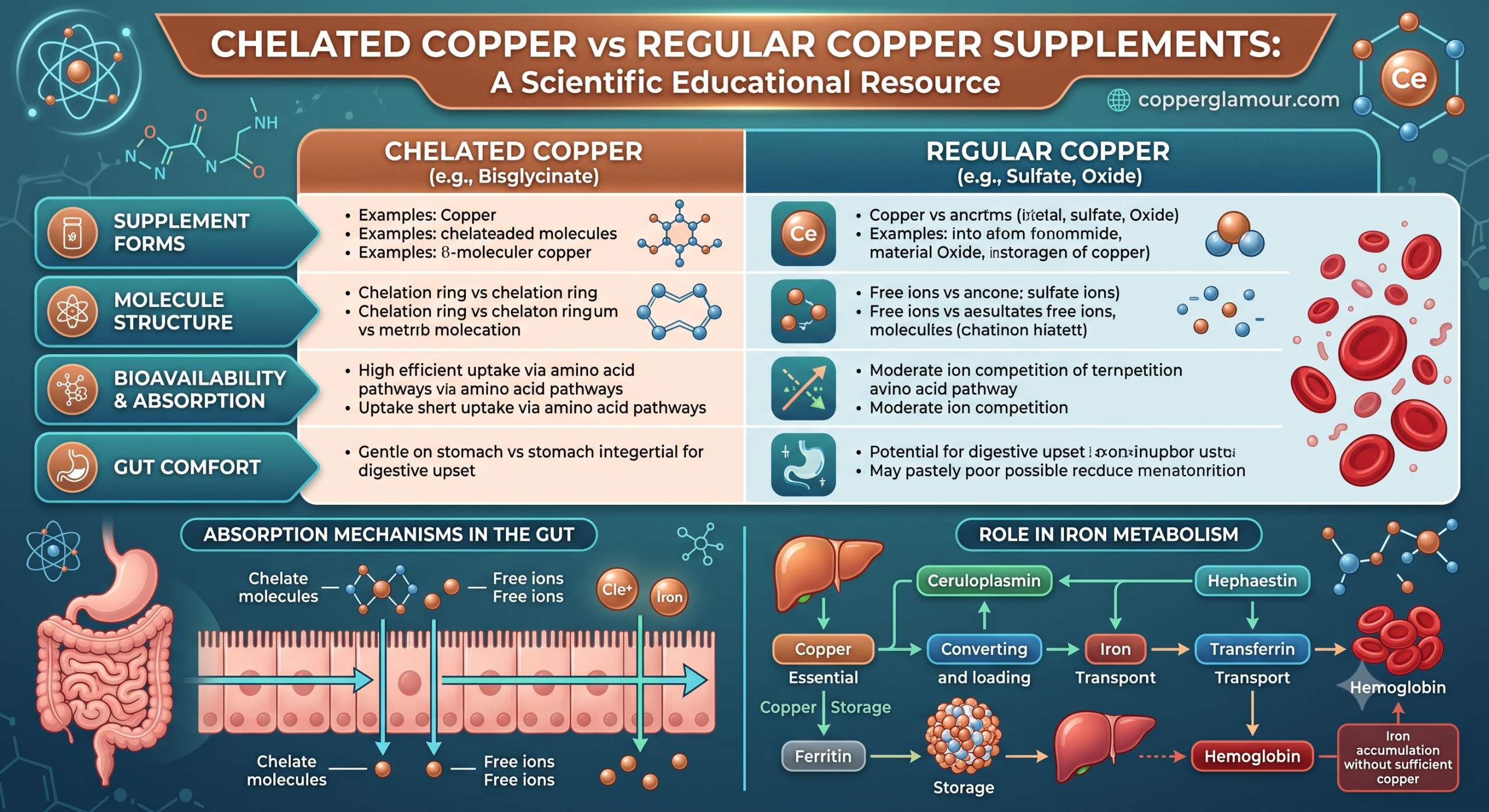
Chelated Copper vs Copper: Understanding Supplement Forms, Absorption, and Their Role in Iron Metabolism
Chelated Copper vs Copper
When comparing chelated copper vs copper, many people want to know whether one form offers advantages over another. Copper is an essential trace mineral that supports normal iron metabolism, connective tissue formation, nervous system function, immune health, antioxidant enzyme activity, and cellular energy production. Although copper is required only in small amounts, maintaining adequate intake is important because the body cannot produce this mineral on its own.
Several forms of copper supplements are available today. Consequently, understanding how they differ can help you make an informed decision while avoiding misleading marketing claims.
At Copper Glamour, we celebrate copper through handcrafted jewelry, cookware, drinkware, and decorative home accessories inspired by one of history’s most remarkable metals.
According to Wikipedia’s article on Copper, copper has served humanity for thousands of years because of its exceptional durability, conductivity, and biological importance.
Browse the Copper Glamour Collection to discover artisan-crafted copper products.
What Is Chelated Copper?
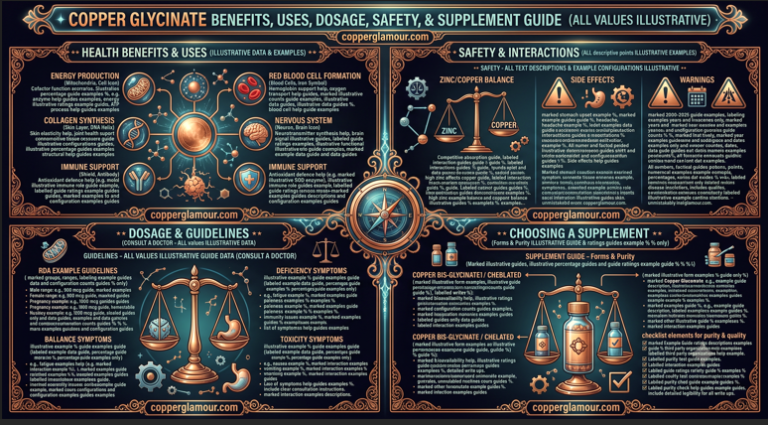
Chelated copper is copper that has been chemically bound to amino acids or similar organic compounds. This process creates a stable mineral complex that manufacturers formulate for dietary supplements.
Common chelated forms include:
- Copper glycinate
- Copper bisglycinate
- Copper amino acid chelate
Because these compounds remain stable during digestion, chelated products are widely available in nutritional supplements.
What Is Non-Chelated Copper?
Non-chelated copper supplements provide elemental copper combined with other compounds rather than amino acids.
Examples include:
- Copper citrate
- Copper gluconate
- Copper sulfate
Each form supplies elemental copper. However, the binding compound differs from one formulation to another.
Chelated Copper vs Copper
The primary difference between chelated copper vs copper lies in how the mineral is attached to another molecule.
Chelated copper:
- Is bonded to amino acids.
- Forms a stable mineral complex.
- Includes products such as copper glycinate and copper bisglycinate.
Other copper supplements:
- Use compounds such as citrate or gluconate.
- Also provide elemental copper.
- Remain widely used in dietary supplements.
Current scientific evidence does not establish one supplemental form as universally superior for every individual. Instead, total dietary intake, digestive health, overall nutrition, and product quality all contribute to how the body utilizes copper.
The National Institutes of Health Office of Dietary Supplements provides evidence-based information about copper intake, food sources, and supplement safety.
Copper Glycinate vs Copper Bisglycinate
One of the most common questions concerns copper glycinate vs copper bisglycinate.
In most dietary supplements, these names refer to the same chelated copper compound. Manufacturers often choose one term over the other for labeling purposes, although both describe copper bound to glycine molecules.
Therefore, product quality, elemental copper content, manufacturing standards, and dosage are generally more important than the wording used on the label.
Copper Citrate vs Copper Glycinate
Another popular comparison is copper citrate vs copper glycinate.
Copper citrate combines copper with citric acid, while copper glycinate combines copper with the amino acid glycine.
Both provide elemental copper.
Copper glycinate is a chelated form designed to maintain stability during digestion. Copper citrate is another well-established supplemental form found in many dietary products.
Current research does not show that one form consistently performs better for every individual.
Copper Bisglycinate vs Glycinate
Consumers frequently compare copper bisglycinate vs glycinate.
In practice, these names generally describe the same ingredient.
Both refer to copper that has been bound to glycine to create a chelated mineral complex.
Consequently, there is usually no meaningful nutritional difference between products labeled copper glycinate and those labeled copper bisglycinate.
Absorption of Copper
The absorption of copper occurs mainly in the small intestine. After absorption, the body transports copper to the liver, where it is incorporated into proteins that distribute the mineral throughout the body.
Several factors can influence copper absorption, including:
- Overall dietary pattern
- Zinc intake
- Digestive health
- Age
- Individual nutritional status
Because these factors vary from person to person, no single copper supplement form guarantees better absorption for everyone.
Research published through PubMed continues to explore copper metabolism and mineral absorption.
Copper and Iron
The relationship between copper and iron is well established in human nutrition.
Copper contributes to normal iron metabolism by supporting proteins involved in transporting and utilizing iron throughout the body. As a result, maintaining adequate copper intake is important for healthy iron balance.
However, copper is not a replacement for iron. Each mineral performs its own unique functions within the body.
Iron Copper Supplement
Some multivitamins and mineral products include both nutrients in an iron copper supplement.
Manufacturers often combine them because copper supports normal iron metabolism. Nevertheless, the appropriate dosage depends on an individual’s nutritional needs and should follow product instructions or professional healthcare advice.
Copper for Iron Deficiency
Many people search for copper for iron deficiency.
Copper plays an important role in normal iron metabolism, but iron deficiency should not be self-treated with copper supplements alone. If iron deficiency is suspected or diagnosed, appropriate medical evaluation and treatment are important because the underlying cause determines the best approach.
Copper supplementation should only be used when it is appropriate for an individual’s nutritional needs.
Colloidal Copper Benefits
Some supplements promote colloidal copper benefits or colloidal copper health benefits.
Colloidal copper contains microscopic copper particles suspended in liquid. However, there is currently limited high-quality clinical evidence demonstrating unique health benefits compared with established dietary copper formulations such as copper glycinate, copper gluconate, or copper citrate.
Therefore, selecting products that clearly identify the amount of elemental copper and follow recognized quality standards is generally the more evidence-based approach.
Natural Food Sources of Copper
Before considering supplementation, remember that many foods naturally contain copper.
Excellent dietary sources include:
- Oysters
- Crab
- Beef liver
- Cashews
- Almonds
- Sunflower seeds
- Sesame seeds
- Lentils
- Mushrooms
- Dark chocolate
- Whole grains
For many healthy adults, these foods provide sufficient copper to support normal nutritional needs.
Copper Beyond Nutrition
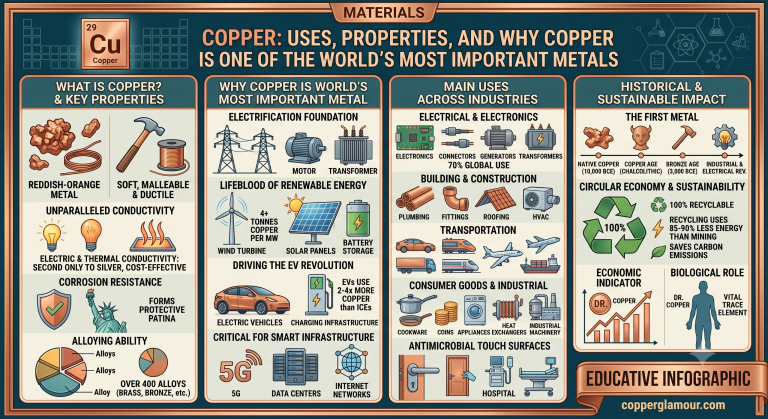
Copper is valued around the world for much more than its biological importance.
Today, industries rely on copper for:
- Electrical wiring
- Renewable energy systems
- Electric vehicles
- Plumbing
- Telecommunications
- Roofing
- Cookware
- Jewelry
- Decorative home accessories
Its durability, corrosion resistance, and recyclability continue to make copper one of the world’s most important engineering materials.
Frequently Asked Questions
What is chelated copper?
Chelated copper is copper that has been bonded to amino acids or similar compounds to create a stable mineral complex used in dietary supplements.
Is copper glycinate the same as copper bisglycinate?
Yes. In most dietary supplements, these terms describe the same chelated copper compound.
Which is better, copper citrate or copper glycinate?
Both forms provide elemental copper. Current evidence does not establish one form as consistently superior for every individual.
Does copper help with iron?
Copper contributes to normal iron metabolism and supports proteins involved in iron transport. However, it does not replace iron or treat iron deficiency by itself.
Are colloidal copper supplements better?
Current scientific evidence does not demonstrate unique health benefits for colloidal copper compared with established dietary copper formulations.
Where is copper absorbed?
Copper is absorbed primarily in the small intestine before being transported to the liver and distributed throughout the body.
Final Thoughts
Understanding chelated copper vs copper helps you evaluate supplement options based on evidence rather than marketing claims. Additionally, copper glycinate, copper bisglycinate, copper citrate, and other formulations all provide elemental copper while using different binding compounds. Current research does not identify one form as universally superior, so product quality, appropriate dosage, and individual nutritional needs remain the most important considerations. Finally, maintaining a balanced diet rich in natural copper sources continues to be the preferred foundation for healthy copper intake, while any concerns about iron deficiency should be assessed by a qualified healthcare professional.
Complete your collection with handcrafted copper jewelry, cookware, drinkware, and decorative home accessories from Copper Glamour.