Copper in Latin: The Origin of Cu, Copper’s Name, and Its Scientific Identity
Copper in Latin
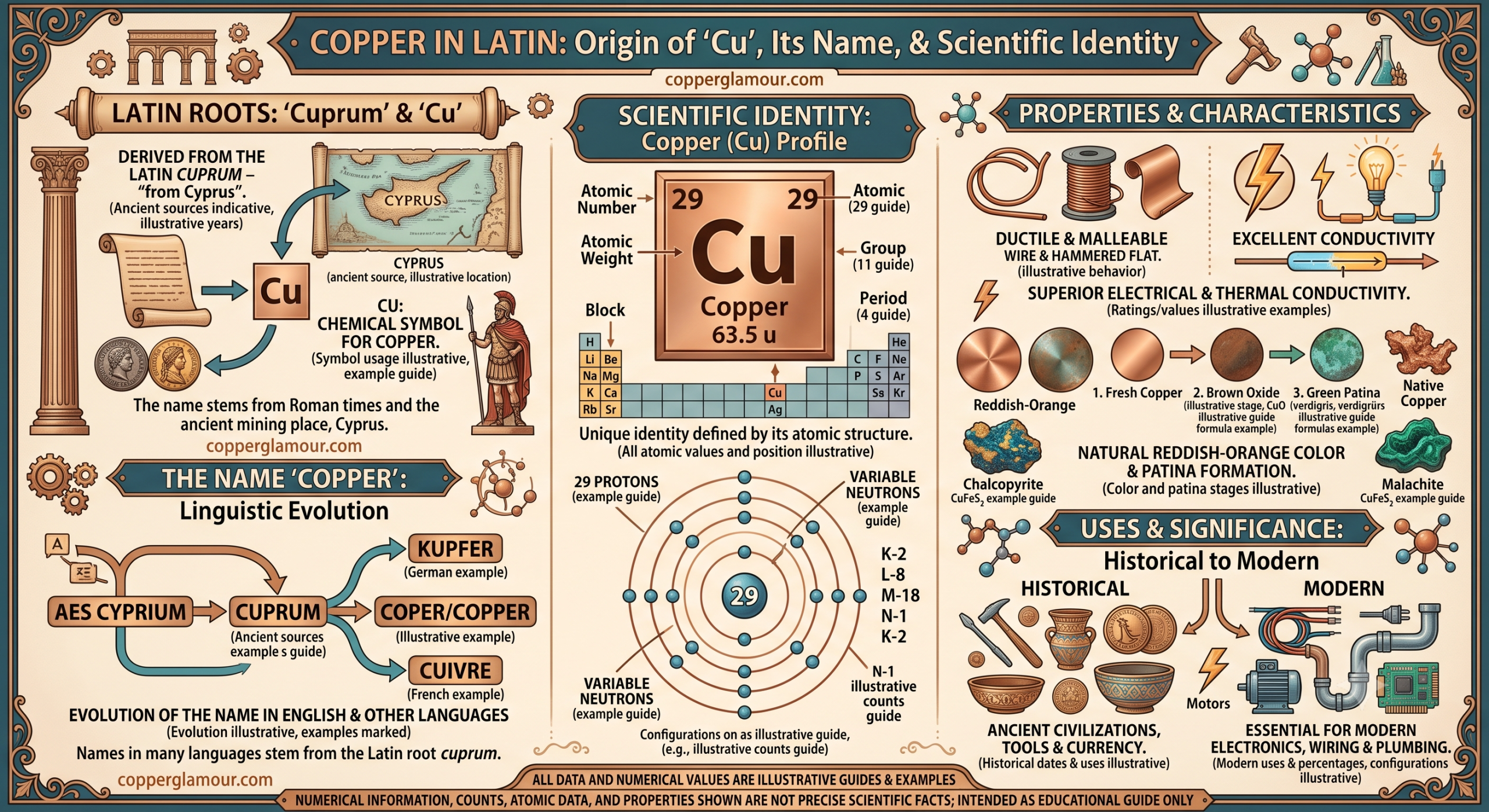
The Latin name for copper is Cuprum. This ancient name is the source of copper’s chemical symbol, Cu, which appears on the periodic table today. The word Cuprum originated from the Latin phrase aes Cyprium, meaning “metal of Cyprus,” because the Mediterranean island of Cyprus was one of the ancient world’s most important sources of copper.
Understanding copper in Latin provides insight into the metal’s long history and explains why scientists continue to use Cu as the internationally recognized symbol for copper.
At Copper Glamour, we celebrate copper’s rich heritage by offering handcrafted jewelry, cookware, drinkware, and home décor that showcase the beauty and durability of this remarkable metal.
According to Wikipedia’s article on Copper, copper has been mined, refined, and used by humans for more than 10,000 years, making it one of the oldest known metals.
Explore the Copper Glamour Collection to discover artisan-crafted copper products inspired by centuries of craftsmanship.
What Is the Latin Name for Copper?
The Latin name for copper is Cuprum.
The scientific community continues to use this Latin name because it forms the basis of copper’s chemical symbol:
- Element: Copper
- Latin name: Cuprum
- Chemical symbol: Cu
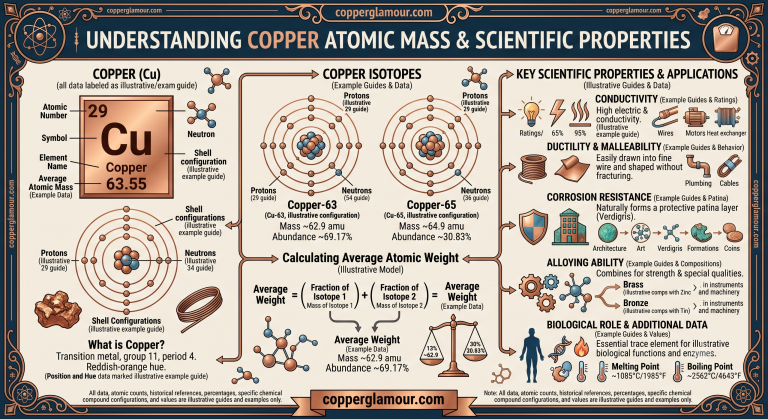
- Atomic number: 29
- Atomic mass: 63.546 u
Therefore, whenever you see Cu in chemistry, physics, or engineering, it refers directly to the Latin name Cuprum.
Copper Name
The modern English copper name evolved over thousands of years.
The historical progression is generally understood as:
- Aes Cyprium (“metal of Cyprus”)
- Cuprum (Latin)
- Coper (Old English)
- Copper (Modern English)
Although pronunciation changed over time, the scientific symbol Cu remained unchanged because it honors the original Latin name.
How Did Copper Get Its Name?
Many people ask, how did copper get its name?
Ancient Romans imported large amounts of copper from Cyprus and referred to it as aes Cyprium, meaning “metal of Cyprus.” Over time, the phrase shortened to Cuprum, which later evolved into the English word copper.
Today, scientists still use Cu because it preserves copper’s historical and scientific heritage.
What Type of Element Is Copper?
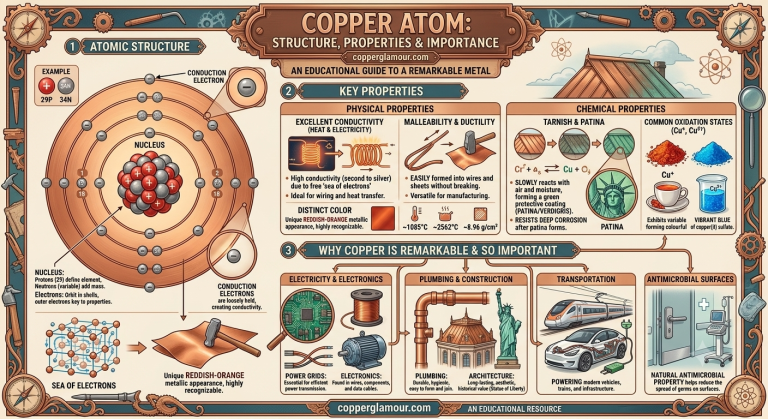
Copper is a chemical element classified as a transition metal.
Its scientific information includes:
- Atomic number: 29
- Chemical symbol: Cu
- Group: 11
- Period: 4
- Classification: Transition metal
Transition metals are known for their strength, conductivity, and ability to form useful alloys. Consequently, copper remains one of the most important engineering materials in the world.
What Type of Metal Is Copper?
Copper is a transition metal.
Unlike many metals, copper combines:
- Excellent electrical conductivity
- Outstanding thermal conductivity
- High malleability
- Excellent ductility
- Natural corrosion resistance
- Long service life
- Excellent recyclability
These properties make copper valuable in electrical systems, renewable energy, telecommunications, construction, transportation, and decorative products.
Is Copper Metal?
Yes, copper is a metal.
More specifically, it is one of the most widely used industrial metals because it performs exceptionally well in both mechanical and electrical applications.
What Is Copper Made Out Of?
Many people wonder, what is copper made out of?
Copper is not manufactured from other materials. Instead, it is a naturally occurring chemical element found within copper-bearing mineral ores beneath the Earth’s surface.
After mining, these ores undergo refining processes that remove impurities and produce high-purity copper suitable for manufacturing and artisan craftsmanship.
What Is Copper Atomic Mass?
Copper has an average atomic mass of 63.546 atomic mass units (u).
Scientists calculate this value using the weighted average of copper’s two naturally occurring stable isotopes:
- Copper-63
- Copper-65
Atomic mass is one of the fundamental properties used to identify copper on the periodic table.
What Are Copper’s Chemical Properties?
Copper possesses several important chemical properties that contribute to its durability and versatility.
These include:
- Naturally forms a protective oxide layer when exposed to air.
- Common oxidation states of +1 and +2.
- Moderate chemical reactivity.
- Excellent ability to form engineering alloys such as:
- Brass (copper and zinc)
- Bronze (copper and tin)
- Strong corrosion resistance in many environments.
The American Chemical Society (ACS) offers additional educational information about copper’s chemistry and materials science.
What Is the State of Matter of Copper?
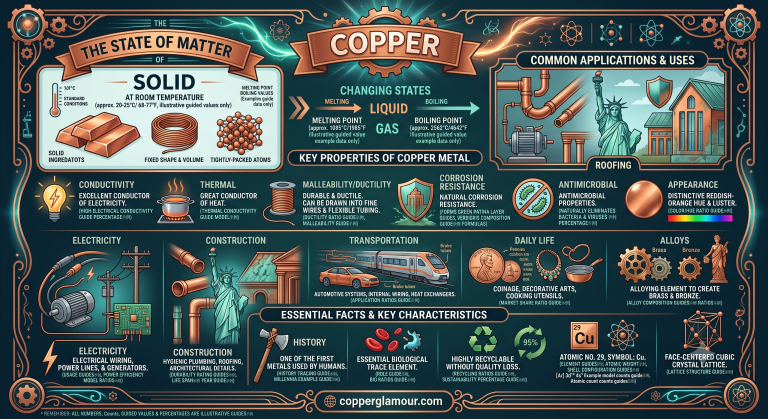
Under normal conditions, the state of matter of copper is solid.
Copper remains solid at room temperature because its melting point is approximately 1,084°C (1,983°F). Only at much higher temperatures does it become a liquid and eventually a gas.
Its solid state, combined with excellent strength and conductivity, makes copper ideal for manufacturing products such as electrical wiring, plumbing systems, cookware, architectural components, and decorative items.
Why Copper Continues to Be Important
Copper has remained valuable throughout history because it combines exceptional performance with long-term durability.
Today, industries rely on copper for:
- Electrical wiring
- Renewable energy systems
- Electric vehicles
- Telecommunications
- Plumbing
- Roofing
- Industrial equipment
- Kitchen cookware
- Jewelry
- Decorative home accessories
Additionally, copper is highly recyclable without losing its essential properties, making it an environmentally responsible material.
Research available through PubMed explores copper’s engineering and materials science applications. The National Institutes of Health Office of Dietary Supplements also explains copper’s role as an essential trace mineral in human nutrition.
Copper in Artisan Craftsmanship
Copper’s rich history extends beyond science and engineering into art and design.
Because copper is durable, workable, and visually distinctive, artisans continue to create beautiful mugs, kettles, bowls, bracelets, necklaces, and decorative accessories that can last for generations. Over time, many handcrafted copper pieces develop a natural patina that enhances their appearance while protecting the underlying metal.
Discover artisan-crafted collections at Copper Glamour, where traditional craftsmanship meets modern American design.
Frequently Asked Questions
What is copper in Latin?
The Latin name for copper is Cuprum.
How did copper get its name?
Copper’s name comes from the Latin phrase aes Cyprium, meaning “metal of Cyprus,” which later became Cuprum and eventually the English word “copper.”
What type of element is copper?
Copper is a transition metal and a naturally occurring chemical element.
What is copper atomic mass?
Copper has an average atomic mass of 63.546 atomic mass units (u).
What are copper’s chemical properties?
Copper naturally forms protective oxides, commonly exhibits +1 and +2 oxidation states, resists corrosion, and readily forms useful alloys such as brass and bronze.
What is the state of matter of copper?
Copper is a solid under normal room-temperature conditions.
Final Thoughts
Understanding copper in Latin helps explain both the history and scientific identity of one of the world’s most important metals. The Latin name Cuprum gave rise to the chemical symbol Cu, which remains universally recognized today. As a naturally occurring transition metal, copper offers excellent conductivity, corrosion resistance, durability, and recyclability. These characteristics continue to make copper indispensable in modern technology, renewable energy, architecture, transportation, and artisan craftsmanship.
Discover handcrafted copper jewelry, cookware, drinkware, and home décor at Copper Glamour.